Today's
EarthStation1.com 15% Off Commemorative Memorial Title: The
Fabulous Sixties with Peter Jennings TV Docuseries MP4 Or DVD Set
Today, February 2, 2026
February 2: Groundhog Day (Pennsylvania
German: Grundsaudaag, Grundsow Dawg, Murmeltiertag; Nova Scotia:
Daks Day): -- February 2, 1887: In Punxsutawney, Pennsylvania, the
first Groundhog Day, a popular tradition celebrated in Canada and
the United States on February 2 is observed. It derives from the
Pennsylvania Dutch superstition that if a groundhog emerging from
its burrow on this day sees a shadow due to clear weather, it will
retreat to its den and winter will persist for six more weeks, and
if it does not see its shadow because of cloudiness, spring will
arrive early. While the tradition remains popular in modern times,
studies have found no consistent correlation between a groundhog
seeing its shadow or not and the subsequent arrival time of
spring-like weather. The weather lore was brought from
German-speaking areas where the badger (German: Dachs) is the
forecasting animal. This appears to be an enhanced version of the
lore that clear weather on Candlemas forebodes a prolonged winter.
The Groundhog Day ceremony held at Punxsutawney in western
Pennsylvania, centering around a semi-mythical groundhog named
Punxsutawney Phil, has become the most attended. Grundsow Lodges
in Pennsylvania Dutch Country in the southeast part of the state
celebrate them as well. Other cities in the United States and
Canada have also adopted the event. The 1993 film Groundhog Day
helped boost recognition of the custom, and the celebration has
spread even further afield. In 2009, Quebec began to mark the day
(Canadian French: Jour de la Marmotte) with its own groundhog. On
Sale @ 15% Off Discount Till Midnight PT!
https://store.earthstation1.com/decades-the-1960s-dvd-set-peter-jennings-tv-series-3-19603.html
Today's
EarthStation1.com 15% Off Commemorative Memorial Title: TV
Commercials: The Cable Age Classics II DVD, Download, USB Drive
Today, February 2, 2026
February 2: Hedgehog Day: -- Ouch!
National Hedgehog Day tends to live in the "shadow" of
Groundhog Day -- and yes, there is a difference! National Hedgehog
Day highlights these loveable creatures but heeds this word of
warning - don't get too close! Yet while hedgehogs certainly know
how to defend themselves, we can all still do our bit to help
protect them, and what better time to start than on National
Hedgehog Day. National Hedgehog Day is a Roman tradition that
predates the modern Groundhog Day. While groundhogs are native to
North America, various animals have been used in Europe to help
predict the end of winter and the coming of spring, including the
hedgehog. The Ancient Roman tradition passed down into other
European folklore, in particular in Ireland. If a hedgehog was
seen at the start of February it was thought to be a sign of good
weather and a promise of warmer days, whereas a no-show from
hedgehogs meant winter was sure to continue for several more
weeks. In hindsight, this may not have been an especially reliable
method of weather forecasting, especially given that hedgehogs
tend to hibernate from November through to the middle of March!
They do however emerge from hibernation periodically during these
months to change nesting sites, so any ancient weather watchers
most likely spotted hedgehogs simply going elsewhere to carry on
hibernating. In fact, hibernating is a risky business for these
animals. Sadly, up to around two-thirds of hedgehogs won't make it
through their first winter, especially if food has been scarce.
Their body temperature, breathing, and heart rate drops
dramatically (to as little as two beats per minute), and it's
vital that they stock up on enough food before winter to keep them
going until spring. National Hedgehog Day also tied in with the US
release date for Sonic the Hedgehog 3 in 1994. There have been a
number of famous hedgehogs in popular culture, with Sonic probably
the most well-known - he's certainly the fastest, and this
electric blue character has featured in a series of Japanese video
games as well as his own movie. The British children's author
Beatrix Potter created Mrs. Tiggy-Winkle, another well-known
hedgehog who happens to be extremely good at laundry. And the
hedgehog has been popular throughout history, whether the subject
of parables and poems, worshipped as sacred or thought to hold
valuable medicinal qualities. On Sale @ 15% Off Discount Till
Midnight PT!
https://store.earthstation1.com/tv-commercials-the-cable-age-classics-ii-dvd.html
Today's
EarthStation1.com 15% Off Commemorative Memorial Title: Super
Sense Animal Perception/Plant Adaptation TV Series DVD, MP4, USB
Today, February 2, 2026
February 2: Sled Dog Day: -- February 2,
1925: The Interwar Period (The Aftermath Of World War I, The
Interbellum, Between The Wars): The Roaring Twenties (The Age Of
Ballyhoo): The 1925 Serum Run To Nome (The Great Race Of Mercy,
The Serum Run): -- Dog sleds reach Nome, Alaska with diphtheria
serum, inspiring The Iditarod Trail Sled Dog Race, now an annual
long-distance sled dog race held in Alaska in early March. In
commemoration of The Serum Run, Sled Dog Day honors the
hardest-working dog breed - the sled dogs. These large dogs are
trained to wear a harness and pull heavy weights in the coldest
regions. They were the only means of transport in areas such as
the Arctic for thousands of years and are still the most reliable
way to transport supplies in the more rural areas. Sled dogs
played an important role in the exploration of the Arctic and the
Antarctic poles and were instrumental during the Alaskan Gold
Rush. Sled dogs are popular in the coldest regions of the world.
They've been used in Canada, Norway, Sweden, Lapland, Finland,
Siberia, and, closer home, Alaska. Thought to have been crossbred
with wolves, sled dogs have been specifically bred to be large and
capable of carrying really heavy weight across large distances. In
America, sled dogs were first kept by the Inuit people for
transportation. During the Alaskan Gold Rush, the only way to
access the gold camps in winter was by dog sled. Any supplies -
from food to medication - would need to be moved by dogsled in
winter because there was no other transportation available at the
time. Sled dogs were also used to deliver mail. Between this and
the explorations of the poles, sled dogs have played a vital role
in the lives of people living in the frozen parts of the planet.
When there was a diphtheria outbreak in Nome, Alaska, sled dogs
came to the rescue. A serum was needed to treat the suffering
people of Nome, but there was none in town. The nearest town with
the scrum was Nenana, but that was 600 miles away and inaccessible
except by dog sled. Villages between the two towns set up a relay
with different teams of dogs working to get the serum to Nome. The
serum reached in six days, thanks to the efforts of the people and
the hardworking sled dogs. Today, fewer dog sleds are necessary
for survival and transportation. Instead, dog sledding has become
a recreational activity, with races set up to celebrate the sheer
power and speed of the incredible sled dog breeds. The dogs pull
their sleds as a team, and each member of the team is carefully
chosen to ensure that they make up for each other's weaknesses and
work well together. On Sale @ 15% Off Discount Till Midnight PT!
https://store.earthstation1.com/super-sense--animal-perception-tv-series-dvd-mp4-download-usb-driv4.html
Today's
EarthStation1.com 15% Off Commemorative Memorial Title: Romer's
Egypt Ancient Egypt TV Series/The Hyksos Invasion MP4 DVD Set
Today, February 2, 2026
February 2: National River Day: --
Celebrates all the Rivers across the globe. The word 'river'
conjures up images of a body of water, yet it's also a fairly
unusual baby name. The name River has gained popularity over
recent years. River Jude Phoenix, the late actor, was a famous
namesake, and his famous brother, Joaquin Phoenix, named his son
River after him. River is a gender-neutral English name that means
"Stream of water that flows to the sea." It is derived
from the Latin word 'ripa,' which means 'riverbank.' A river is a
"naturally flowing watercourse that flows towards an ocean,
sea, lake, or another river, and is usually freshwater." In
some instances, a river may flow into the ground and become dry at
the end of its course before reaching another source of water.
Creeks, rivulets, brooks, streams, and rills are all terms used to
describe small rivers. 'Riparius' originally referred to a
'riverbank', but when it was corrupted into Old French as
'riviere', it began to refer to both the river and the edge. The
Normans introduced the word to England, where it was shortened to
'rivere' and then to the word 'river' that we know today. The
Riviera and other coastal places like it allude to the original
meaning of the word. In the 1970s, River was a name given to a few
babies. It was a counterculture name, along with Summer and Rain,
Liberty, and Freedom. After all, the Phoenix named their son
River. River Phoenix, born in 1970, rose to fame after starring in
the 1986 film "Stand by Me." He had already received an
Oscar nomination and a slew of awards by the time he passed away
in 1993, thanks to his roles in "Running On Empty" and
"My Own Private Idaho." On Sale @ 15% Off Discount Till
Midnight PT!
https://store.earthstation1.com/romer39s-egypt-dvd-set-complete-tv-series-2-di392.html
Today's
EarthStation1.com 15% Off Commemorative Memorial Title:
Revelation: The History Of Christianity DVD, Video Download, USB
Drive
Today, February 2, 2026
February 2: Candlemas (Candlemas Day): --
A day when followers of Jesus celebrate his Presentation at the
Temple and the Virgin Mary being purified, with many of the
faithful bringing candles to their churches to be blessed.
Thereafter (in Poland, for example, where they're lit and placed
in windows to ward off storms), the candles represent Jesus and
the day of his induction into Judaism, and they go toward
explaining the name of the holy day, Candlemas. Among the many
holy feasts in the Christian calendar, the Feast of the
Presentation, or the Feast of the Purification of the Virgin Mary,
on Candlemas Day is one of the oldest, celebrated since the 4th
century A.D. in Jerusalem. A woman of that time, Egeria, who's
credited with writing a detailed account of an extended pilgrimage
to the Holy Land, described the Candlemas celebrations there:
"_all things are done in order with great joy, just as at
Easter. All the priests preach, and also the bishop, always
treating of that passage of the Gospel where, on the fortieth day,
Joseph and Mary brought the Lord into the Temple, and Simeon and
Anna the prophetess, the daughter of Famuhel, saw Him, and of the
words which they said when they saw the Lord, and of the offerings
which the parents presented." In the 6th century, around 541
A.D., responding to a horrible plague that had struck
Constantinople, Emperor Justinian I ordered huge prayer
processions throughout the city during the Feast of the
Presentation to ask God for deliverance from the evil of the
disease. At this time, the tradition of holding blessed candles in
reverence had long been in place, and after the plague passed, the
regular celebration of Candlemas spread throughout the Roman
Empire. There are as many additional traditions and various
guidelines for the observance of Candlemas as there are different
sects and denominations of Christianity itself. Even instances of
historical importance are sometimes contested and argued. At the
base of it, a person of faith can turn to the relevant Bible
verse, Luke 2:22-24. That passage describes how Mary and Jesus
follow the rule in Leviticus that says an infant boy should be
circumcised on the eighth day after birth, and that, thirty-three
days later, the mother is considered "clean" and should
burn an offering at the boy's presentation at the temple on that
40th day. Today, you might think the word "Candlemas"
sounds antiquated, a reference to something like a scene from
"Oliver Twist" or an old black-and-white movie. But to
faithful Christians even now, Candlemas is a solemn and worshipful
time, a time to try to be "a light in the world." On
Sale @ 15% Off Discount Till Midnight PT!
https://store.earthstation1.com/revelation-the-history-of-christianity-documentary.html
Today's
EarthStation1.com 15% Off Commemorative Memorial Title: When
Baseball Went To War: Baseball & Its Players During WWII MP4
DVD
Today, February 2, 2026
February 2: National Catchers Day: --
Catchers receive pitches from pitchers while crouching behind the
home plate in front of the umpire. Celebrated catchers of the past
and present are honored on National Catcher's Day. Baseball, and
consequently the role of catchers, underwent huge changes
throughout its history. Baseball evolved from a recreational sport
to a professional sport in the mid-19th century. Ever since the
introduction of the called strike in 1858, a catch became required
to complete a strikeout. At first, catchers used to stand 20 to 25
feet behind the batter and wore no protective gear. When baseball
clubs started using harder balls and the pitchers' release points
rose, the Dead-ball era began. The new protective equipment and
the new rules changed the catcher's defensive responsibilities. A
pitcher's deceptive deliveries could only be effective if the
catcher could field them, so catching became an important
defensive position. Closer positioning of the catcher would affect
pitching delivery, revolutionizing the sport. It was possible for
Candy Cummings to introduce the curveball in the 1870s due to the
proximity of the home plate and the ability of his catcher, Nat
Hicks, to field his position. Other specialist pitches like
spitballs and knuckleballs followed, emphasizing the catcher's
defensive role. With such a crucial role, it's no wonder that Xan
Barksdale created National Catchers Day in 2019. On Sale @ 15% Off
Discount Till Midnight PT!
https://store.earthstation1.com/when-baseball-went-to-war-baseball-and-its-players-during-wwii-mp4-dvd.html
Today's
EarthStation1.com 15% Off Commemorative Memorial Title: The
American Diary: US History 1895-1933 TV Series DVD MP4 USB Drive
Today, February 2, 2026
February 2: Record Of A Sneeze Day: --
This day's genesis can be traced to January 9, 1894, when the
first motion picture was recognized as a copyrightable work of
art. This motion picture was the Edison kinetoscopic record of a
sneeze. They submitted a still photograph of the film's forty-five
frames for copyright purposes. Fred Ott is sneezing in this scene.
William K. L. Dickson, Edison's assistant and project supervisor
for the new motion film, filed a copyright application. The still
picture frames were recaptured and reassembled into a moving
picture. Filmed on January 7, 1894, it is known as the Edison
Kinetoscopic Record of a Sneeze and is the first motion picture to
be accepted for copyright protection. It was submitted as a still
photograph for copyright purposes because it contains 45 frames.
In this case, Fred Ott is sneezing. Assistant to Edison and new
film project supervisor William K. Laurie Dickson submitted a
copyright application. A motion picture was created by
re-photographing the still images and then re-editing them."
Experts say there are more than just germs and pollen to blame for
an asthma attack. Sneezing can occur more frequently upon exposure
to bright light, such as sunshine. One study conducted at the
Saarland University Medical Center in Germany discovered that
nearly all of the more than 1,000 patients tested in the ENT
department exhibited photic (light-induced) sneeze reflexes. The
researchers amusingly called this ACHOO (Autosomal Compelling
Helio-Ophthalmic Outburst). Humans don't sneeze while they're fast
asleep. According to some theories, the body's muscles relax, and
reflexes slow down during rapid eye movement. A sneezing fit can
last for a long time. The Guinness Book of World Records lists a
sneezing fit lasting 976 days. Donna Griffiths set a new record
for the lengthiest period of sneezing. During the first 365 days,
she had sneezed an estimated one million times. On Sale @ 15% Off
Discount Till Midnight PT!
https://store.earthstation1.com/american-diary-complete-us-historytv-series-2-dual-layer-dvd2.html
Today's
EarthStation1.com 15% Off Commemorative Memorial Title: The
American Adventure: TV History Series 1607-1876 DVD MP4 USB Drive
Today, February 2, 2026
February 2: The Treaty Of Guadalupe
Hidalgo Day: -- February 2, 1848: The Mexican-American War (The
Mexican War): The Treaty Of Guadalupe Hidalgo (The Treaty Of
Peace, Friendship, Limits, And Settlement Between The United
States Of America And The United Mexican States): -- The Treaty Of
Guadalupe Hidalgo is signed, agreeing to end the war and to cede
California, Nevada, Utah and territories that would comprise a
further six other modern-day U.S. states to the United States for
a sum of 15M USD. The Treaty Of Guadalupe Hidalgo (Spanish:
Tratado de Guadalupe Hidalgo), officially titled "The Treaty
of Peace, Friendship, Limits and Settlement between the United
States of America and the Mexican Republic", is the peace
treaty signed on February 2, 1848, in the Villa de Guadalupe
Hidalgo (now a neighborhood of Mexico City) between the United
States and Mexico that ended the Mexican-American War (1846-1848).
The treaty was ratified by the United States on March 10 and by
Mexico on May 19. The ratifications were exchanged on May 30, and
the treaty was proclaimed on July 4, 1848. With the defeat of its
army and the fall of its capital in September 1847, Mexico entered
into negotiations with the U.S. peace envoy, Nicholas Trist, to
end the war. On the Mexican side, there were factions that did not
concede defeat or seek to engage in negotiations. The treaty
called for the United States to pay 15M USD to Mexico and to pay
off the claims of American citizens against Mexico up to 5M USD.
It gave the United States the Rio Grande as a boundary for Texas,
and gave the U.S. ownership of California and a large area
comprising roughly half of New Mexico, most of Arizona, Nevada,
and Utah and Colorado. The land that The Treaty Of Guadalupe
Hidalgo brought into the United States became, between 1850 and
1912, all or part of nine states: California (1850), Nevada
(1864), Utah (1896), and Arizona (1912), as well as, depending
upon interpretation, the entire state of Texas (1845), which then
included part of Kansas (1861); Colorado (1876); Oklahoma (1907);
and New Mexico (1912). Mexicans in those annexed areas had the
choice of relocating to within Mexico's new boundaries or
receiving American citizenship with full civil rights. The U.S.
Senate advised and consented to ratification of the treaty by a
vote of 38-14. The opponents of this treaty were led by the Whigs,
who had opposed the war and rejected manifest destiny in general,
and rejected this expansion in particular. The amount of land
gained by the United States from Mexico was further increased as a
result of the Gadsden Purchase of 1853, which ceded parts of
present-day southern Arizona and New Mexico to the United States.
On Sale @ 15% Off Discount Till Midnight PT!
https://store.earthstation1.com/the-american-adventure-series-us-1st-century-4-dv14.html
Today's
EarthStation1.com 15% Off Commemorative Memorial Title: The Battle
Of Stalingrad DVD, MP4 Video Download, USB Flash Drive
Today, February 2, 2026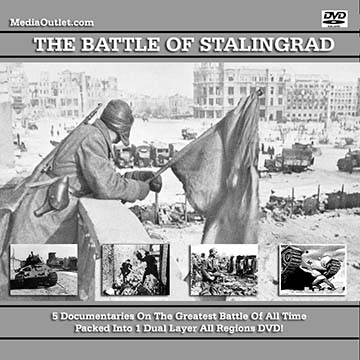
February 2: Russian Day Of Military
Honour: Victory In The Battle Of Stalingrad, 1943: -- Soviet
troops accept the surrender of the last German troops in the city
in Stalingrad. The Days Of Military Honour are special memorable
dates in the Russian Armed Forces dedicated to the most
outstanding victories won by Russia. Some of these dates are state
holidays but the majority of them is celebrated purely in the
military. The Battle Of Stalingrad, the largest confrontation of
World War II, in which Germany and its allies fought the Soviet
Union for control of the city of Stalingrad (now Volgograd) in
Southern Russia, began on August 23, 1942 and lastied until
February 2, 1943. Marked by fierce close quarters combat and
direct assaults on civilians in air raids, it was the largest
(nearly 2.2 million personnel) and bloodiest (1.8-2 million
killed, wounded or captured) battle in the history of warfare.
After their defeat at Stalingrad, the German High Command had to
withdraw vast military forces from the Western Front to replace
their losses. The German offensive to capture Stalingrad began
using the 6th Army and elements of the 4th Panzer Army. The attack
was supported by intensive Luftwaffe bombing that reduced much of
the city to rubble. The fighting degenerated into house-to-house
fighting; both sides poured reinforcements into the city. By
mid-November 1942, the Germans had pushed the Soviet defenders
back at great cost into narrow zones along the west bank of the
Volga River. On 19 November 1942, the Red Army launched Operation
Uranus, a two-pronged attack targeting the weaker Romanian and
Hungarian armies protecting the German 6th Army's flanks. The Axis
forces on the flanks were overrun and the 6th Army was cut off and
surrounded in the Stalingrad area. Adolf Hitler ordered that the
army stay in Stalingrad and make no attempt to break out; instead,
attempts were made to supply the army by air and to break the
encirclement from the outside. Heavy fighting continued for
another two months. By the beginning of February 1943, the Axis
forces in Stalingrad had exhausted their ammunition and food. The
remaining units of the 6th Army surrendered. The battle lasted
five months, one week and three days. On Sale @ 15% Off Discount
Till Midnight PT!
https://store.earthstation1.com/battle-of-stalingrad-dual-layer-dvd.html
Today's
EarthStation1.com 15% Off Commemorative Memorial Title: New York
City History Documentary Collection MP4 Video Download DVD
Today, February 2, 2026
February 2, 1653: The Colonial History Of
The United States: Dutch Colonization Of The Americas: New
Netherland (Dutch: Nieuw Nederland, Latin: Novum Belgium): The
British Colonization Of The Americas: The History Of New York
City: New Amsterdam (Dutch: Nieuw Amsterdam): -- New Amsterdam, a
17th-century Dutch settlement established at the southern tip of
Manhattan Island that served as the seat of the colonial
government in New Netherland, is incorporated; it would ultimately
evolved into The City of New York. New Amsterdam was established
outside of Fort Amsterdam, a fort situated on the strategic
southern tip of the island of Manhattan and was meant to defend
the fur trade operations of the Dutch West India Company in the
North River (Hudson River). In 1624, it became a provincial
extension of the Dutch Republic and was designated as the capital
of the province of New Netherland in 1625. New Amsterdam was a
factorij (factory), the common name during medieval and early
modern times for an entrepot (port of entry) a transshipment port,
being a port, city, or trading post where merchandise may be
imported, stored or traded, usually to be exported again.
Factorijs and Entrepots were an early form of free-trade zone. At
a factory, local inhabitants could interact with foreign
merchants, often known as factors. First established in Europe,
factories eventually spread to many other parts of the world. The
factories established by European states in Africa, Asia and the
Americas from the 15th century onward also tended to be official
political dependencies of those states. These have been seen, in
retrospect, as the precursors of colonial expansion. By 1655, the
population of New Netherland had grown to 2,000 people, with 1,500
living in New Amsterdam. By 1664, the population of New Netherland
had skyrocketed to almost 9,000 people, 2,500 of whom lived in New
Amsterdam, 1,000 lived near Fort Orange, and the remainder in
other towns and villages. In 1664 the English took over New
Amsterdam and renamed it New York City after the Duke of York
(later James II & VII). After the Second Anglo-Dutch War of
1665-67, England and the United Provinces of the Netherlands
agreed to the status quo in the Treaty of Breda. The English kept
the island of Manhattan, the Dutch giving up their claim to the
town and the rest of the colony, while the English formally
abandoned Surinam in South America, and the island of Run in the
East Indies to the Dutch, confirming their control of the valuable
Spice Islands. On Sale @ 15% Off Discount Till Midnight PT!
https://store.earthstation1.com/new-york-city-history-videos-3-dvd-se3.html
Today's
EarthStation1.com 15% Off Commemorative Memorial Title: Frank
Lloyd Wright Documentaries DVD, Video Download, USB Flash Drive
Today, February 2, 2026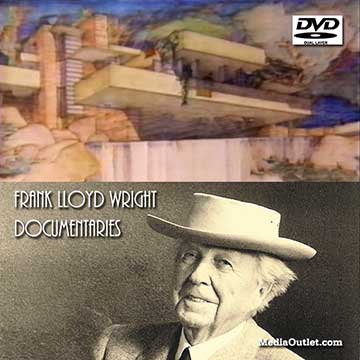
February 2, 1861: #BOTD: #HBD! Solomon R.
Guggenheim, American businessman and philanthropist, founder of
the Solomon R. Guggenheim Museum (d. November 3, 1949) is #born
Solomon Solomon Robert Guggenheim in Philadelphia, Pennsylvania
into a wealthy mining family. Guggenheim founded the Yukon Gold
Company in Alaska, among other business interests. He began
collecting art in the 1890s, and after World War I, he retired
from his business to pursue full-time art collecting. Eventually,
under the guidance of artist Hilla Von Rebay, he focused on the
collection of modern and contemporary art, creating an important
collection by the 1930s and opening his first museum in 1939. The
Solomon R. Guggenheim Museum, often referred to as The Guggenheim,
is an art museum located at 1071 Fifth Avenue on the corner of
East 89th Street in the Upper East Side neighborhood of Manhattan,
New York City. It is the permanent home of a continuously
expanding collection of Impressionist, Post-Impressionist, early
Modern and contemporary art and also features special exhibitions
throughout the year. The museum was established by the Solomon R.
Guggenheim Foundation in 1939 as the Museum of Non-Objective
Painting, under the guidance of its first director, the artist
Hilla Von Rebay. It adopted its current name after the death of
its founder, Solomon R. Guggenheim, in 1952. In 1959, the museum
moved from rented space to its current building, a landmark work
of 20th-century architecture. Designed by Frank Lloyd Wright, the
cylindrical building, wider at the top than the bottom, was
conceived as a "temple of the spirit". Its unique ramp
gallery extends up from ground level in a long, continuous spiral
along the outer edges of the building to end just under the
ceiling skylight. The building underwent extensive expansion and
renovations in 1992 (when an adjoining tower was built) On Sale @
15% Off Discount Till Midnight PT!
https://store.earthstation1.com/frank-lloyd-wright-documentaries-dvd.html
Today's
EarthStation1.com 15% Off Commemorative Memorial Title: Is There
One Who Understands Me? The World Of James Joyce DVD MP4 USB
Today, February 2, 2026
February 2, 1882: #BOTD: #HBD! James
Joyce, Irish novelist, short story writer, and poet, regarded as
one of the most influential and important authors of the 20th
century(d. January 13, 1941) is #born James Augustine Aloysius
Joyce at 41 Brighton Square, Rathgar, Dublin, Ireland. James Joyce
contributed to the modernist avant-garde, and is best known for
Ulysses (1922), published on his 40th birthday, a landmark work in
which the episodes of Homer' Odyssey are paralleled in a variety
of literary styles, perhaps most prominently stream of
consciousness. Other well-known works are the short-story
collection Dubliners (1914), and the novels A Portrait of the
Artist as a Young Man (1916) and Finnegans Wake (1939). His other
writings include three books of poetry, a play, his published
letters and occasional journalism. Joyce was #born in 41 Brighton
Square, Rathgar, Dublin, into a middle-class family on the way
down. A brilliant student, he briefly attended the Christian
Brothers-run O'Connell School before excelling at the Jesuit
schools Clongowes and Belvedere, despite the chaotic family life
imposed by his father' alcoholism and unpredictable finances. He
went on to attend University College Dublin. In 1904, in his early
twenties, Joyce emigrated to continental Europe with his partner
(and later wife) Nora Barnacle. They lived in Trieste, Paris and
Zurich. Alhough most of his adult life was spent abroad, Joyce'
fictional universe centres on Dublin, and is populated largely by
characters who closely resemble family members, enemies and
friends from his time there. Ulysses in particular is set with
precision in the streets and alleyways of the city. Shortly after
the publication of Ulysses, he elucidated this preoccupation
somewhat, saying, "For myself, I always write about Dublin,
because if I can get to the heart of Dublin I can get to the heart
of all the cities of the world. In the particular is contained the
universal.". on June 16, 1904, he began his relationship with
Nora Barnacle, and subsequently used the date to set the actions
for his novel Ulysses; this date is now traditionally called
"Bloomsday" after one of the two heroes of the novel,
Leopold Bloom. On December 29, 1916, A Portrait of the Artist as a
Young Man, the first novel by James Joyce, was first published as
a book by an American publishing house B. W. Huebschis after it
had been serialized in The Egoist (1914-15). On December 6, 1933,
U.S. federal judge John M. Woolsey ruled in the case of United
States v. One Book Called Ulysses that James Joyce' novel Ulysses
was not obscene. Even before its publication in 1922, serialized
chapters of the book appearing in The Little Review literary
magazine as early as 1918 were being seized and burned by the US
Postal Service as early as 1919. The publishers were arrested on
October 4, 1920 and charged with obscenity for publishing the
"Nausicaa" episode of Ulysses. The trial was held in
February 1921, and a panel of three judges decided that the
passages from the "Nausicaa" episode did indeed
constitute obscenity. In 1933 Random House, which had the rights
to publish the entire book in the United States, decided to bring
a test case to challenge the de facto ban, so as to publish the
work without fear of prosecution. It therefore made an arrangement
to import the edition published in France, and to have a copy
seized by the U.S. Customs Service when the ship carrying the work
arrived. Although Customs had been told in advance of the
anticipated arrival of the book, the local official declined to
confiscate it, stating "everybody brings that in." He
and his superior were finally convinced to seize the work. The
United States Attorney then took seven months before deciding
whether to proceed further. While the Assistant U.S. Attorney
assigned to assess the work' obscenity felt that it was a
"literary masterpiece," he also believed it to be
obscene within the meaning of the law. The office therefore
decided to take action against the work under the provisions of
the Tariff Act of 1930, which allowed a district attorney to bring
an action for forfeiture and destruction of imported works which
were obscene. The book has attracted controversy and scrutiny,
ranging from the 1921 obscenity trial in America to protracted
textual "Joyce Wars". Ulysses' stream-of-consciousness
technique, careful structuring, and experimental prose: full of
puns, parodies, and allusions: as well as its rich
characterisation and broad humour, have led it to be regarded as
one of the greatest literary works. James Joyce died at 2:15 AM in
Zurich, Switzerland of perforated duodenal ulcer at the age of 58.
He is buried at the Friedhof Fluntern in Zurich. On Sale @ 15% Off
Discount Till Midnight PT!
https://store.earthstation1.com/is-there-one-who-understands-me-the-world-of-james-joyce-dvd.html
Today's
EarthStation1.com 15% Off Commemorative Memorial Title: The Old
Time Radio Comedy MegaSet MP3 Collection DVD, Download, USB
Today, February 2, 2026
February 2, 1897: Great Inventions: --
Alfred L. Cralle (September 4, 1866 - May 6, 1919), African
American porter, noticed while working at a hotel Pittsburgh,
Pennsylvania that the popular treat ice cream was difficult to
dispense. It stuck to spoons and ladles and usually required two
hands and at least two implements to serve. Cralle invented a
mechanical device, the "Ice Cream Mold And Disher", now
known as the ice cream scoop, an ice cream scoop with a built-in
scraper to allow for one-handed operation, and applied for a
patent on June 10, 1896. On February 2, 1897, the 30-year old was
granted U.S. Patent #576395. Alfred L. Cralle,businessman and
inventor, (September 4, 1866 - May 6, 1919), was born in
Kenbridge, Lunenburg County, Virginia, in 1866, just after the end
of the American Civil War. He attended local schools and worked
with his father in the carpentry trade as a young man, becoming
interested in mechanics. He was sent to Washington, D.C., where he
attended Wayland Seminary, one of a number of schools founded by
the American Baptist Home Mission Society to help educate African
Americans after the Civil War. He then settled in Pittsburgh,
Pennsylvania, where he first served as a porter in a drug store,
then at the hotel where he got the idea for the ice cream scooper.
Alfred's functional design is still reflected in modern ice cream
scoops. He later become a general manager for the Afro-American
Financial, Accumulating, Merchandise And Business Association. On
September 20, 1900 he married Elizabeth Cralle and had three
children with her. Cralle died from a car wreck, in Pittsburgh,
aged 52. He is buried at Mount Carmel Cemetery in Kenbridge,
Virginia, On Sale @ 15% Off Discount Till Midnight PT!
https://store.earthstation1.com/old-time-radio-comedy-mp3-dvd-megaset-2-dis32.html
Today's
EarthStation1.com 15% Off Commemorative Memorial Title: The Good
Old Time Radio Theme Song MP3 CD, Audio Download, USB Drive
Today, February 2, 2026
February 2, 1913: Grand Openings: --
Grand Central Station Train Terminal (Grand Central Terminal (GCT;
also referred to as Grand Central Station or simply as Grand
Central) first opens after ten years of construction with the
departure of a Boston Express train; the first arrival occurred a
minute later. Within sixteen hours, there were an estimated
150,000 visitors. Grand Central Terminal is the largest commuter
rail terminal in the Americas, located at 42nd Street and Park
Avenue in Midtown Manhattan, New York City. Grand Central is the
southern terminus of the Metro-North Railroad's Harlem, Hudson and
New Haven Lines, serving the northern parts of the New York
metropolitan area. It also contains a connection to the Long
Island Rail Road through the Grand Central Madison station, a
16-acre (65,000 m2) rail terminal underneath the Metro-North
station, built from 2007 to 2023. The terminal also connects to
the New York City Subway at Grand Central-42nd Street station. The
terminal is the second-busiest train station in North America,
after New York Penn Station. The distinctive architecture and
interior design of Grand Central Terminal's station house have
earned it several landmark designations, including as a National
Historic Landmark. Its Beaux-Arts design incorporates numerous
works of art. Grand Central Terminal is one of the world's ten
most-visited tourist attractions, with 21.6 million visitors in
2018, excluding train and subway passengers. The terminal's Main
Concourse is often used as a meeting place, and is especially
featured in films and television. Grand Central Terminal contains
a variety of stores and food vendors, including upscale
restaurants and bars, a food hall, and a grocery marketplace. The
building is also noted for its libraries, event hall, tennis club,
control center and offices for the railroad, and sub-basement
power station. Grand Central Terminal was built by and named for
the New York Central Railroad; it also served the New York, New
Haven and Hartford Railroad and, later, successors to the New York
Central. Opened in 1913, the terminal was built on the site of two
similarly-named predecessor stations, the first of which dated to
1871. Grand Central Terminal served intercity trains until 1991,
when Amtrak began routing its trains through nearby Penn Station.
Grand Central covers 48 acres (19 ha) and has 44 platforms, more
than any other railroad station in the world. Its platforms, all
below ground, serve 30 tracks on the upper level and 26 on the
lower. In total, there are 67 tracks, including a rail yard and
sidings; of these, 43 tracks are in use for passenger service,
while the remaining two dozen are used to store trains. On Sale @
15% Off Discount Till Midnight PT!
https://store.earthstation1.com/radio-theme-song-mp3-cd-classic-old-time-broadcast3.html
Today's
EarthStation1.com 15% Off Commemorative Memorial Title: James
Joyce's Ulysses + Portrait Of The Artist DVD, MP4, USB Drive
Today, February 2, 2026
February 2, 1922 (2/2/22): First
Publications: -- Ulysses, a modernist novel by Irish writer James
Joyce, regarded as one of the greatest literary works in history,
is published by Shakespeare and Company, an influential
English-language bookstore in Paris founded by Sylvia Beach in
1919, on Joyce's 40th birthday. It was first serialized in parts
in the American journal The Little Review from March 1918 to
December 1920. It is considered one of the most important works of
modernist literature and has been called "a demonstration and
summation of the entire movement." According to Declan
Kiberd, "Before Joyce, no writer of fiction had so
foregrounded the process of thinking". Ulysses chronicles the
appointments and encounters of the itinerant Leopold Bloom in
Dublin in the course of an ordinary day, June 16, 1904. Ulysses is
the Latinised name of Odysseus, the hero of Homer's epic poem the
Odyssey, and the novel establishes a series of parallels between
the poem and the novel, with structural correspondences between
the characters and experiences of Bloom and Odysseus, Molly Bloom
and Penelope, and Stephen Dedalus and Telemachus, in addition to
events and themes of the early 20th-century context of modernism,
Dublin, and Ireland's relationship to Britain. The novel is highly
allusive and also imitates the styles of different periods of
English literature. Since its publication, the book has attracted
controversy and scrutiny, ranging from an obscenity trial in the
United States in 1921 to protracted textual "Joyce Wars".
The novel's stream of consciousness technique, careful
structuring, and experimental prose-replete with puns, parodies,
and allusions-as well as its rich characterisation and broad
humour have led it to be regarded as one of the greatest literary
works in history; Joyce fans worldwide now celebrate June 16 as
Bloomsday. On Sale @ 15% Off Discount Till Midnight PT!
https://store.earthstation1.com/james-joyce39s-ulysses-dvd-dramatic-documenta39.html
Today's
EarthStation1.com 15% Off Commemorative Memorial Title:
Television: A History Of Broadcast TV DVD MP4 Download USB Drive
Today, February 2, 2026
February 2, 1937: #BOTD: #HBD! Tom
Smothers, American singer, guitarist, composer, comedian, actor
and activist, best known as half of the musical comedy duo the
Smothers Brothers, alongside his younger brother Dick (d. December
26, 2023) is #born Thomas Bolyn Smothers III at the Fort Jay army
post hospital on Governors Island in New York City, the son of
Ruth (nee Remick), a homemaker; and Major Thomas B. Smothers, an
army officer who died a POW in April 1945. After moving to
California, he graduated from Redondo Union High School in Redondo
Beach, California. He was a competitive unicyclist, and a state
champion gymnast in the parallel bars. Smothers later attended San
Jose State University, then known as San Jose State College. At
SJSC, Smothers participated both in gymnastics and pole vault for
the track team. The Smothers Brothers initially wanted to be folk
musicians. Tom did not feel that he was good enough to be a
professional musician, but he was funny enough to do comedy. The
two began adding comedy bits to their act, of which Smothers said
"It was a series of performances when we started out as a
duet in Aspen. I did all the introductions. I'd just make up stuff
for every song. And Dickie said, "Why don't you try repeating
some of that stuff?" I said, "I don't know." I
didn't know that you could repeat the stuff. And I started
repeating it and Dickie would say, "That's wrong." And
pretty soon he'd say, "That's wrong, you're stupid." It
sort of became an argument." Tom's first foray into the
medium of television was as a regular on The Steve Allen Show in
1961. He followed that role with a single episode of Burke's Law.
The Smothers Brothers next appeared on the CBS sitcom The Smothers
Brothers Show from 1965 to 1966. Tom felt that the show did not
play to the brothers' strengths, and they took creative control
over their next venture, The Smothers Brothers Comedy Hour, a
variety show from 1967 to 1969. The Smothers Brothers Show is an
American fantasy sitcom featuring the Smothers Brothers that aired
on CBS on Friday nights at 9:30 p.m. ET from September 17, 1965 to
April 22, 1966, co-sponsored by Alberto-Culver's VO5 hairdressing
products and American Tobacco's Tareyton cigarettes. It was the
first television show to feature the Smothers Brothers as
regulars, following a series of night club and guest appearances.
It lasted one season, consisting of 32 episodes. It was also the
network's last situation comedy filmed in black-and-white; shortly
after its final telecast, all CBS prime-time series were
transmitted in color. In 1986, two decades after cancellation,
reruns were seen on Nick at Nite. The Smothers Brothers Comedy
Hour is an American comedy and variety show television series
hosted by the Smothers Brothers and initially airing on CBS from
1967 to 1969. The series was a major success, especially
considering it was scheduled against the major NBC television
series Bonanza, with content that appealed to contemporary youth
viewership with daring political satire humor and major music acts
such as Buffalo Springfield, Pete Seeger, Cream, and The Who.
Despite this success, continual conflicts with network executives
over content led to the show being abruptly pulled from the
schedule in violation of the Smothers' contract in 1969. After the
show was canceled, Tom became more adamant in his politics. In the
1970s, Smothers chided popular comedian Bill Cosby for not taking
a stand on political issues of the day such as civil rights. In
October 1976, both Cosby and Smothers were in attendance at a
Playboy Mansion party. The tension between the two culminated in
Cosby's punching Smothers in the head. Tom Smothers's politics are
in marked contrast to those of his brother Richard, who is a
conservative. Tom stated in 2006 that the duo's real-life
political and philosophical differences were a key part of their
ability to maintain their act for as long as they did. In 2008,
during the 60th Primetime Emmy Awards, Smothers was awarded a
special Emmy. In 1968, when he was head writer of The Smothers
Brothers Comedy Hour, the writing staff was awarded the Emmy for
Outstanding Writing in a Comedic Series. Smothers had refused to
let his name be on the list of writers nominated for the Emmy,
because he felt his name was too volatile. The award at the 2008
ceremony was presented by Steve Martin, who was once a writer on
the program. On May 6, 2011, the American Civil Liberties Union's
Sonoma County chapter honored Smothers with its Jack Green Civil
Liberties Award for his work against television censorship and for
speaking out for peace and civil liberties. Tom and Dick Smothers
reunited in 2019 to mark the 50th anniversary of The Smothers
Brothers Comedy Hour's abrupt cancellation. Smothers is the owner
of Remick Ridge Vineyards in Sonoma County, California, with his
wife Marcy Carriker and two children, Bo (born 1991), and Riley
Rose (born 1996). He also has a son, Thomas Bolyn Smothers IV (Tom
Jr.), from his first marriage, and one grandson, Phoenix
Parrish-Smothers. There is a Smothers sister, Sherry, born
September 1941, in Pasadena, California. In 2023, Tom Smothers
announced he had been diagnosed with stage two lung cancer. He
died from the disease at his home in Santa Rosa, California, at
age 86. His remains were cremated and were given to his widow
Marcy Carriker. On Sale @ 15% Off Discount Till Midnight PT!
https://store.earthstation1.com/television-1988-tv-documentary-series-8-shows-4-dual-laye198884.html
Today's
EarthStation1.com 15% Off Commemorative Memorial Title: 50 Years
Together: Channel 2 And You WCBS-TV (1991) DVD MP4 USB Drive
Today, February 2, 2026
February 2, 1968: Labor Union Disputes
(Trade Union Disputes): Strikes (Strike Actions, Labor Strikes,
Labour Strikes): Sanitation Strikes: The 1968 New York City
Sanitation Strike: -- Seven thousand sanitation workers of
Teamsters Local 831 flood City Hall Park demanding higher wages
and benefits, beginning The 1968 New York City Sanitation Strike
(February 2-10, 1968). That crowd was 70 percent of the entire
sanitation workforce. For years the city had had an unfair policy
by which sanitation workers' salaries had to be lower than police
and firefighters' salaries. And sanitation workers contributed
more from their paychecks but got lower pensions compared to
police and firefighters. The importance of the strike was
underlined by a flier handed out by Local 831, which pointed out
the life expectancy of a sanitation worker was 54 years compared
to 67 for the entire U.S. population. Even today, according to the
Federal Bureau of Labor Statistics, "refuse and recyclable
material collectors" consistently have one of the highest
rates of on-the-job fatalities. Seventeen NYC sanitation workers
were killed on the job between 2000 and 2014. The workers'
decision to strike was about far more than money. One sanitation
worker, a shop steward, said it all at a standing-room-only union
meeting two days before the vote: "We may handle garbage but
we're not garbage." The sanitation workers' contract with the
city had run out in May 1967. The city offered the workers a mere
400 annual wage increase. When NYC mayor John Lindsay refused the
union's demand for only 200 more a year and other improved
benefits, the workers shouted, "No contract, no work!"
Then they "persuaded" (!) their union leadership to
waive the Teamsters' constitutional requirement for a mail-ballot
strike vote and launched the great NYC sanitation workers' strike
of 1968. The 1968 New York City Sanitation Strike continued for
nine days until Feb. 10, despite the media opposition to the
union. The New York Times wrote on Feb. 9: "The runaway
strike by the city's unionized garbage collectors is the latest
miscarriage of civil service unionism that relies on the illegal
application of force to club the community into extortionate wage
settlements. _ Mayor Lindsay has taken the right and necessary
course in moving for an injunction under the state's new Taylor
Law. The city cannot surrender to such tyrannical abuse of union
power." The President of the Sanitation Workers' Union, John
Delury, was jailed. Mayor Lindsay asked other unions, including
District Council 37 of the American Federation of State, County
and Municipal Employees, the city's largest public employee union,
to provide scabs and have their members pick up the garbage. In
solidarity with the striking workers, other city workers refused.
When Mayor Lindsay appealed to Gov. Nelson Rockefeller to call in
the New York National Guard to break the strike, all the city
unions, including DC37 and the New York City Central Labor
Council, threatened a general strike. By Feb. 10, the New York
Times was begging Rockefeller not to call in the Guard to avoid
"insuring a general strike by all municipal civil service
employees, and perhaps by all New York labor." Rockefeller
flinched, saying: "The National Guard was used to break a
strike in which a family corporation was involved when I was a
child. Men and women were killed. _ I will not use the National
Guard." Rockefeller was referring to the 1914 Ludlow
massacre, when his grandfather, John D. Rockefeller, the owner of
Colorado Fuel and Iron Company, got the Colorado governor to call
in the National Guard to break a mine workers' strike. The miners
and their families were huddled in tents when the militia opened
fire. Over 60 strikers and family members were shot dead or burned
alive when their tents were set ablaze by the troops. When the
strike was finally settled, the union won a wage increase above
the city's offer: double-time pay for Sunday work and a 2.5
percent increase in the city's contribution to their pension
funds. Most of all, this was a victory for dignity and respect for
the sanitation workers and for labor solidarity. Two days after
the NYC sanitation workers' strike ended on Feb. 12, the
predominantly African American sanitation workers in Memphis,
Tenn., went on strike. The union on the ground in the strike was
AFSCME Local 1733. This was the famous "I Am a Man"
strike, which the Rev. Dr. Martin Luther King Jr. was supporting
when he was assassinated. During the two years after the New York
City and Memphis strikes, sanitation workers in Baltimore, Md.;
Washington, D.C.; Charlotte, N.C.; Atlanta, Ga.; Miami and St.
Petersburg, Fla.; and Corpus Christi, Texas, all went out on
strike. On Sale @ 15% Off Discount Till Midnight PT!
https://store.earthstation1.com/50-years-together-channel-2-amp-you-dvd-wcbstv-new-y502.html
Today's
EarthStation1.com 15% Off Commemorative Memorial Title: A Rustling
Of Leaves: Inside The Philippine Revolution DVD, MP4, USB
Today, February 2, 2026
February 2, 1987: The Aftermath Of World
War II: The Cold War: The Cold War (1979-1985): The Cold War Era
Of Stagnation (1964-1982): The Cold War In Asia: Coups In The
Philippines: The People Power Revolution (The EDSA Revolution, The
Philippine Revolution Of 1986, The February Revolution, The Yellow
Revolution): The Constitution Of The Philippines: -- Following as
a consequnce of the 1986 People Power Revolution, a nationwide
plebiscite ratifies and thereby enacts a new Philippines
constitution, The Constitution Of The Philippines (Filipino:
Saligang Batas Ng Pilipinas, Konstitusyon Ng Pilipinas), which
remains the current constitution or the supreme law of the
Republic of the Philippines, whose final draft was completed by
the Constitutional Commission on October 12, 1986. The People
Power Revolution was a series of popular demonstrations in the
Philippines, mostly in the capital city of Manila from February
22-25, 1986. There was a sustained campaign of civil resistance
against regime violence and alleged electoral fraud. The
nonviolent revolution led to the departure of President Ferdinand
Marcos along with his authoritarian regime and the restoration of
democracy in the Philippines. The Constitution of the Philippines
(Filipino: Saligang Batas ng Pilipinas or Konstitusyon ng
Pilipinas, Spanish: Constitucion de la Republica de Filipinas) is
the constitution or supreme law of the Republic of the
Philippines. Its final draft was completed by the Constitutional
Commission on October 12, 1986 and was ratified by a nationwide
plebiscite on February 2, 1987. Three other constitutions have
effectively governed the country in its history: the 1935
Commonwealth Constitution, the 1973 Constitution, and the 1986
Freedom Constitution. The earliest constitution establishing a
"Philippine Republic", the 1899 Malolos Constitution,
was never fully implemented throughout the Philippines and did not
establish a state that was internationally recognized, due in
great part to the eruption of the Philippine-American War
following its adoption. On Sale @ 15% Off Discount Till Midnight
PT!
https://store.earthstation1.com/a-rustling-of-leaves-inside-the-philippine-revolution-dvd.html
Today's
EarthStation1.com 15% Off Commemorative Memorial Title: Witnesses:
What Happened In Soviet-Afghan War MP4 Video Download DVD
Today, February 2, 2026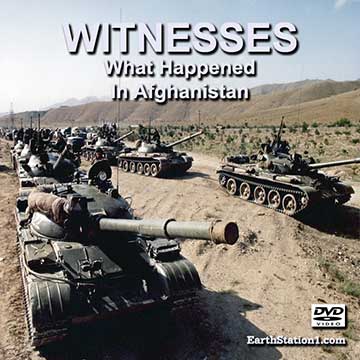
February 2, 1989: The Aftermath Of World
War II: The Cold War: The Afghan Conflict (The Afghan Crisis, The
Instability In Afghanistan): The Soviet-Afghan War: The Soviet
Withdrawal From Afghanistan: -- The last Soviet armoured column
leaves Kabul, the capital and largest city of Afghanistan. The
final and complete withdrawal of Soviet combatant forces from
Afghanistan began on May 15, 1988 and ended on February 15, 1989
under the leadership of Colonel-General Boris Gromov. Planning for
the withdrawal of the Soviet Union (USSR) from the Afghanistan War
began soon after Mikhail Gorbachev became the General Secretary of
the Central Committee of the Communist Party of the Soviet Union.
Under the leadership of Gorbachev, the Soviet Union attempted to
consolidate the People's Democratic Party of Afghanistan's hold
over power in the country, first in a genuine effort to stabilize
the country, and then as a measure to save face while withdrawing
troops. During this period, the military and intelligence
organizations of the USSR worked with the government of Mohammad
Najibullah to improve relations between the government in Kabul
and the leaders of rebel factions. The diplomatic relationship
between the USSR and the United States improved at the same time
as it became clear to the Soviet Union that this policy of
consolidating power around Najibullah's government in Kabul would
not produce sufficient results to maintain the power of the PDPA
in the long run. The Geneva Accords, signed by representatives of
the USSR, the US, the Islamic Republic of Pakistan and the
Republic of Afghanistan (thus renamed in 1987) on 14 April 1988,
provided a framework for the departure of Soviet forces, and
established a multilateral understanding between the signatories
regarding the future of international involvement in Afghanistan.
The military withdrawal commenced soon after, with all Soviet
forces leaving Afghanistan by 15 February 1989. The Soviet-Afghan
War was a conflict wherein insurgent groups (known collectively as
the Mujahideen), as well as smaller Maoist groups, fought a
nine-year guerrilla war against the Soviet Army and the Democratic
Republic of Afghanistan government throughout the 1980s, mostly in
the Afghan countryside. The Mujahideen were variously backed
primarily by the United States, Pakistan, Iran, Saudi Arabia,
China, and the United Kingdom; the conflict was a Cold War-era
proxy war. Between 562,000 and 2,000,000 civilians were killed and
millions of Afghans fled the country as refugees, mostly to
Pakistan and Iran. The war caused grave destruction in Afghanistan
and contributed to the Soviet collapse, in hindsight leaving a
mixed and tragic legacy to the peoples of both territories. On
Sale @ 15% Off Discount Till Midnight PT!
https://store.earthstation1.com/witnesses-what-happened-in-sovietafghan-war-mp4-video-download-dv4.html
Today's
EarthStation1.com 15% Off Commemorative Memorial Title: Apartheid
Documentaries Collection DVD, Video Download, USB Drive
Today, February 2, 2026
February 2, 1990: South Africa: The
History Of South Africa: Segregation: Racial Segregation:
Apartheid (Racial Segregation In South Africa): The Truth and
Reconciliation Commission (TRC): The Final Years Of Apartheid: The
Speech At The Opening Of The Parliament of South Africa, 1990: --
In a speech delivered at the opening of the 1990 session of the
Parliament of South Africa in Cape Town, State President F. W. de
Klerk announces sweeping reforms that include the unbanning of the
African National Congress (ANC) and other anti-apartheid
organisations, the release of Nelson Mandela and other political
prisoners, the end of the national state of emergency, and a
moratorium on the death penalty, marking the beginning of the
transition from apartheid to constitutional democracy. South
Africa's ruling National Party had instituted a policy of
apartheid in 1948, separating the different ethnic groups into set
areas and only giving white South Africans the right to vote. This
was opposed by several groups including the African National
Congress (ANC) which often resorted to violent means to oppose it.
This resulted in most African nationalist groups being banned by
the apartheid government. Accordingly, the South African
government made it a criminal offence to be a member of any banned
organisation. As a result, the leader of the ANC Nelson Mandela
was arrested by the South African Police and had been in prison
for 27 years at the time of the speech. In 1984, South Africa
introduced a new constitution establishing a Tricameral Parliament
with representation for Coloureds and Indians as well as whites
and making the role of State President an executive post. P. W.
Botha of the National Party was the first to hold it but he
resigned in 1989 following a stroke and ministers acting without
his authorization in the face of the National Party losing members
to the far-right Conservative Party. F. W. de Klerk was elected as
the new State President by National Party members (though Botha
retained party leadership) beating Pik Botha and Barend du
Plessis. Upon winning the 1989 South African general election, de
Klerk started to loosen restrictions on peaceful protest marches
and released a few prisoners such as Thabo Mbeki. He then secretly
met with Mandela and discussed the end of apartheid. Two days
before giving the speech, he swore his cabinet to secrecy after
telling them what he was going to do. When de Klerk gave the
speech on 2 February 1990, he had not planned to release Mandela
and only told his wife in the car on the way to Parliament that he
would. He had previously been urged to by the British Prime
Minister Margaret Thatcher who told him it would have the biggest
impact over any other action he could take. De Klerk started his
speech by commenting on foreign relations and human rights before
announcing the suspension of the death penalty. After discussing
economic issues, de Klerk announced the unbanning of the ANC, the
Pan Africanist Congress, the South African Communist Party and a
number of their associated ancillary groups. The audience audibly
gasped at hearing this being announced. He then announced an end
to some of the restrictions implemented in the state of emergency.
De Klerk then announced he would begin negotiations to end the
apartheid system and would negotiate for an equal country with
equal rights and protections and voting rights for all. Following
this, he announced he was releasing Mandela unconditionally but
the release would be delayed slightly due to concerns over
right-wing extremists and due to administrative issues. He ended
by inviting all political leaders to join in the negotiations.
During the speech, Conservative Party MPs walked out shouting
"traitor" at him. The Conservative MP Koos van der Merwe
said "de Klerk is a traitor to his own people, he's trying to
kill the Afrikaner nation." The Conservatives then led a
strike in Pretoria on the day and 5,000 white farmers blocked the
roads. Domestically, Archbishop Desmond Tutu said that de Klerk
"...has taken my breath away". However Mandela's wife
Winnie doubted the sincerity citing that it was dangerous to unban
all the African nationalist organisations, saying "we're not
going to accept a bone without meat". Internationally,
Thatcher wrote to congratulate de Klerk for making the move. The
President of the United States George H. W. Bush responded
positively to the news but needed to hear more before he would
lift American sanctions on South Africa. De Klerk would later
announce Mandela's release on 11 February 1990. South Africa held
a whites only referendum in March 1992 asking if they approved the
end of apartheid, which the result was 68% for yes over
Conservative opposition. An interim constitution was set up in
1993 in preparations for the 1994 South African general election.
On Sale @ 15% Off Discount Till Midnight PT!
https://store.earthstation1.com/apartheid-documentaries-dvd-racial-segregation-in-south-africa.html
Today's
EarthStation1.com #OnThisDay Commemorative Memorial Title:
Montparnasse Revisited: The Genius That Was Paris DVD, MP4, USB
Drive
Today, February 2, 2026 February 2: Crepe Day: -- Crepes are
similar to pancakes, only thinner, and typically used to wrap
around a dessert or other food. Crepe Day offers the opportunity
to put your pancakes on a diet and enjoy the delicious crepe,
whether as breakfast, lunch, or dinner. The history of crepes
dates back to the 13th century in Brittany, France. According to
some, a housewife accidentally dribbled some of this porridge onto
a hot flat cooktop, and then, not wanting it to waste, ate it!
Crepes Day, known as La Chandeleur in France, began as a religious
holiday associated with Candlemas but stems from more pagan
traditions. On this day, the French people traditionally eat
Crepes. It is believed to symbolize the sun, and its composition
represents the flour of the harvest that will bring prosperity in
the coming year. Crepes are usually made with eggs, flour, butter,
milk, and a pinch of salt. Although they originated in France,
they are now very famous in several countries around the world,
including many parts of Europe and North Africa, with each country
having its modification of Crepe, like Apple cinnamon crepes and
chocolate chip crepes. There is a belief that catching the crepe
with a frying pan after tossing it in the air with your right hand
and holding a gold coin in your left would make you rich that
year. The roundness and golden color of a crepe resemble the sun
and its rays, hinting at the change in the weather that Candlemas
would bring. For breakfast, you can try crepes filled with some
fruits, veggies, cheese, and eggs; for lunch, filled with cooked
beans or turkey, cheese, and salsa; and as a dessert, filled with
whipped cream or any pie filling and a top drizzled with berry
sauce or chocolate.
https://store.earthstation1.com/montparnasse-revisted-the-genius-that-was-paris-3-dvd3.html
February 2: Crepe Day: -- Crepes are
similar to pancakes, only thinner, and typically used to wrap
around a dessert or other food. Crepe Day offers the opportunity
to put your pancakes on a diet and enjoy the delicious crepe,
whether as breakfast, lunch, or dinner. The history of crepes
dates back to the 13th century in Brittany, France. According to
some, a housewife accidentally dribbled some of this porridge onto
a hot flat cooktop, and then, not wanting it to waste, ate it!
Crepes Day, known as La Chandeleur in France, began as a religious
holiday associated with Candlemas but stems from more pagan
traditions. On this day, the French people traditionally eat
Crepes. It is believed to symbolize the sun, and its composition
represents the flour of the harvest that will bring prosperity in
the coming year. Crepes are usually made with eggs, flour, butter,
milk, and a pinch of salt. Although they originated in France,
they are now very famous in several countries around the world,
including many parts of Europe and North Africa, with each country
having its modification of Crepe, like Apple cinnamon crepes and
chocolate chip crepes. There is a belief that catching the crepe
with a frying pan after tossing it in the air with your right hand
and holding a gold coin in your left would make you rich that
year. The roundness and golden color of a crepe resemble the sun
and its rays, hinting at the change in the weather that Candlemas
would bring. For breakfast, you can try crepes filled with some
fruits, veggies, cheese, and eggs; for lunch, filled with cooked
beans or turkey, cheese, and salsa; and as a dessert, filled with
whipped cream or any pie filling and a top drizzled with berry
sauce or chocolate.
https://store.earthstation1.com/montparnasse-revisted-the-genius-that-was-paris-3-dvd3.html
Today's
EarthStation1.com #OnThisDay Commemorative Memorial Title: Animals
At War: Animals In The Military + Bonus Title MP4 Download DVD
Today, February 2, 2026February 2: National Brown Dog Day: -- An
important reminder for us to celebrate every brown dog we know!
One of the more common canine colors, brown dogs are found across
breeds everywhere in the world - and the most popular of them is
the lovely Labrador breed. So for everyone with a brown-toned
doggo, give them some extra special love on this day. Dogs,
probably, evolved right alongside humans, and tales of their
exploits together have regaled generations of people across the
centuries (and across civilizations). Tales of mutual respect
between canines and us bipeds can be found as far back as the
indigenous people of Siberia, East Asia, North America, and
Australia. We assume dogs were as loved then as they are now - why
else would archaeologists dig up remains from 14,200 years ago
that show a dog buried beside humans? Dogs had taken the world by
storm. Their domestication preceded multiple landmark events in
the human world - the emergence of agriculture as a profession and
the domestication of other animals like boar, sheep, and goats.
Dogs of all shapes and sizes were popular, but research showed
that Saint Bernard was the breed of the hour around the late
1800s. They were overthrown by the gentle, brown-eyed lovable
Labrador breed in the 1990s, and they remain a popular choice for
people around the world. The original Labrador - a now-extinct
ancestor of our Labs - can be traced to Newfoundland, Canada,
where it was bred by European settlers. This breed was then
imported to Britain by a British duke and an earl, for hunting
purposes. They were later bred with British hunting dogs, creating
the Labrador as we know it. The Newfoundland breed and the new
British version were similar enough that early writers often
confused the two. Fifty years on, the name 'Labrador Retriever'
was common across England, and the world saw the first liver (aka
chocolate) Lab in 1892, and the first yellow Labrador (on record)
was born in 1899. Today, the world is very familiar with (and in
awe of) dogs of all breeds, sizes, and shapes. This day is a bit
of added encouragement to love all dogs - especially your
brown-coated ones - a little more.
https://store.earthstation1.com/animals-at-war-military-animals-mp4-video-download-dv4.html
Today's
EarthStation1.com #OnThisDay Commemorative Memorial Title: Rowan &
Martin's Laugh-In MegaSet 2 Albums 2 Blooper Sets MP3 MP4 DVD
Today, February 2, 2026February 2: National Ukulele Day (World
Play Your Ukulele Day): -- The ukulele is a four-stringed
instrument that has its origins in Portugal, but was adapted by
Hawaiians in the 19th Century. Its size can vary, with the larger
instruments producing deeper tones. The ukulele became
particularly popular in Hawaii during the reign of King Kalakaua,
who incorporated the instrument into performances at official
state gatherings. It was later used in recordings by artists such
as Bing Crosby and Elvis Presley. National Ukulele Day takes place
on February 2, when ukulele players from around the country will
strum their favorite tunes to celebrate. This happy-go-lucky
instrument can turn any frown upside down. Its sweet sound and
portability make it perfect for jamming anywhere, anytime!
Everyone loves the sound of a guitar, it's true, but those who
discount the ukulele based on its diminutive size just don't
understand how amazing a sound that is so can be. The ukulele has
a lovely, soft little voice that can fill listeners with joy. And
there is hardly a person on the face of the earth who can keep
their hands off of a ukelele when it's around, even if that person
has no clue how to play. Thankfully, there is no requirement to
know how to play the ukulele on World Play Your Ukulele Day. The
only request is that anyone and everyone will pick up that Ukulele
and play! World Ukulele Day was founded in 2011 by Mike Lynch, a
school teacher who was affectionately known as "Ukulele
Mike". Going back further, the ukulele was introduced to
Hawaii sometime in the late 1870's, though the name of its
predecessor was certainly less adorable than 'jumping flea'. The
origin instrument was of Portuguese origin, and was known as the
machete. Sounds violent, doesn't it? Thankfully, neither the sound
of the ukulele nor its name is violent-in fact, strumming it is
sure to brighten anyone's day. The first ukulele craze happened in
1915, when it was introduced in San Francisco at the
Panama-Pacific International Exposition. The instrument became
super popular, and a few years later the YMCA took it upon
themselves to ship these instruments and their music to soldiers
to bring a bit of joy during World War I. While it originated in
Hawaii, the instrument actually played a central role in helping
to revitalize Canada's music programs, as it was an inexpensive
way to introduce students to music, and was incredibly practical
to teach and foster musical literacy. The Doane program was named
for its creator, J. Chalmers Doane, and during its time it taught
nearly 50,000 children to love and play the ukulele. While the
Doane program has ended, it has a legacy that is headed by James
Hill in coordination with the original Doane. Now, people all over
the world love this little versatile instrument that has become
more and more popular over the past several years.
https://store.earthstation1.com/rowan-and-martin-discount-set-2-albums-2-blooper-reel-sets-mp3-mp4-dvd.html
Today's
EarthStation1.com #OnThisDay Commemorative Memorial Title:
Bertrand Russell: Face To Face Interview MP4 Video Download Or DVD
Today, February 2, 2026February 2, 1970: #DOTD: #RIP: Bertrand
Russell, British philosopher, logician, mathematician, public
intellectual and Nobel Prize In Literatue recipient who influenced
mathematics, logic, set theory, and various areas of analytic
philosophy, free love advocate (b. May 18, 1872) #dies of
influenza just after 8 pm at his home in Penrhyndeudraeth
("PEN-DREN-DAY-dryth"), Merionethshire, Wales aged 97.
His body was cremated on February 5, 1970 in Colwyn Bay, a town
Conwy County Borough on the north coast of Wales overlooking the
Irish Sea, with five people present. In accordance with his will,
there was no religious ceremony but one minute's silence; his
ashes were later scattered over the Welsh mountains.] Although he
was born in Monmouthshire, and died in Penrhyndeudraeth, both in
Wales, Russell identified as English. On October 23, 1970, his
will was published showing he had left an estate valued at 69,423
PS (equivalent to 1.4M PS in 2023). In 1980, a memorial to Russell
was commissioned by a committee including the philosopher A. J.
Ayer. It consists of a bust of Russell in Red Lion Square in
London sculpted by Marcelle Quinton. Bertrand Russell was born at
Ravenscroft, a country house in Trellech, Monmouthshire,
South-East Wales into an influential and liberal family of the
British aristocracy. Bertrand Arthur William Russell, 3rd Earl
Russell's parents were Viscount and Viscountess Amberley. Both
were early advocates of birth control at a time when this was
considered scandalous. Lord Amberley consented to his wife's
relationship with their children's tutor, the biologist Douglas
Spalding. Lord Amberley, a deist, asked the philosopher John
Stuart Mill to act as Russell's secular godfather. Mill died the
year after Russell's birth, but his writings later influenced
Russell's life. Bertrand Russell was one of the early 20th
century's prominent logicians and a founder of analytic
philosophy, along with his predecessor Gottlob Frege, his friend
and colleague G. E. Moore, and his student and protege Ludwig
Wittgenstein. Russell with Moore led the British "revolt
against idealism". Together with his former teacher Alfred
North Whitehead, Russell wrote Principia Mathematica, a milestone
in the development of classical logic and a major attempt to
reduce the whole of mathematics to logic (Logicism). Russell's
article "On Denoting" has been considered a "paradigm
of philosophy". Russell was educated at Trinity College at
the University of Cambridge, where he graduated in 1893. He was a
pacifist who championed anti-imperialism and chaired the
England-based India League. He went to prison for his pacifism
during the First World War, and he initially supported appeasing
Adolf Hitler's Nazi Germany, before changing his view in 1943,
describing war as a necessary "lesser of two evils". In
the wake of the Second World War, he welcomed American global
hegemony in preference to either Soviet hegemony or no (or
ineffective) world leadership, even if it were to come at the cost
of using their nuclear weapons. He would later criticise Stalinist
totalitarianism, condemn the United States' involvement in the
Vietnam War, and become an outspoken proponent of nuclear
disarmament. In 1950 Russell was awarded the Nobel Prize in
Literature "in recognition of his varied and significant
writings in which he champions humanitarian ideals and freedom of
thought". He was also the recipient of the De Morgan Medal
(1932), Sylvester Medal (1934), Kalinga Prize (1957), and
Jerusalem Prize (1963).
https://store.earthstation1.com/bertrand-russell-face-to-face-interview-mp4-video-download-or-dvd.html
Today's
EarthStation1.com #OnThisDay Commemorative Memorial Title: Adam
Clayton Powell Biography + 2 Bonus Titles DVD MP4 Video Download
Today, February 2, 2026February 2, 1955: Civil Rights Movements:
The American Civil Rights Movement (1954-1968): Congressman Adam
Clayton Powell, Jr.'s 1955 Speech On Civil Rights: -- New York
Representative Adam Clayton Powell, then one of only three African
Americans in the U.S. Congress, rose to argue that his colleagues
should support two pending civil rights bills then before the
House of Representatives. His speech began "Mr. Speaker, the
United States Congress is a 19th century body in a 20th century
world. In the field of civil rights we are still conducting
ourselves along the pattern of yesterdays world. Tremendous
changes are taking place in our country eradicating the concept of
second-class citizenship. Yet the United States Congress has done
absolutely nothing in this sphere. We are behind the times. We are
a legislative anachronism. In an age of atomic energy, our dynamic
is no more powerful than a watermill. The executive and the
judicial branches of our Government have passed us by so
completely and are so far ahead that the peoples of our nation do
not even look to the United States Congress any longer for any
dynamic leadership in the field of making democracy real."
https://store.earthstation1.com/adam-clayton-powell-documentary-biography.html
Today's
EarthStation1.com #OnThisDay Commemorative Memorial Title:
Brother, Can You Spare A Dime? (1975) DVD, Video Download, USB
Drive
Today, February 2, 2026February 2, 2005: #DOTD: #RIP: Max
Schmeling, German boxer German boxer who was heavyweight champion
of the world between 1930 and 1932 (b. September 28, 1905) #dies
at the age of 99 of natural causes in Hollenstedt, Germany, a
sporting hero in his native Germany. He is buried at Saint Andreas
Friedhof in Hollenstedt, where in 2010 a bronze statue of
Schmeling was erected in his honor. Max Schmeling was born
Maximillian Adolph Otto Siegfried Schmeling in Klein Luckow,
Province of Brandenburg, Prussia, German Empire. Max Schmeling had
two fights with Joe Louis, in 1936 and 1938, which were worldwide
cultural events because of their racial and national associations.
Starting his professional career in 1924, Schmeling went to the
United States in 1928 and, after a ninth-round technical knockout
of Johnny Risko, became a sensation. He became the first to win
the heavyweight championship (at that time vacant) by
disqualification in 1930, after opponent Jack Sharkey knocked him
down with a low blow in the fourth round. Schmeling retained his
crown successfully in 1931 by a technical knockout victory over
Young Stribling. A rematch in 1932 with Sharkey saw the American
gaining the title from Schmeling by a controversial fifteen-round
split decision. In 1933, Schmeling lost to Max Baer by a
tenth-round technical knockout. The loss left people believing
that Schmeling was past his prime. Meanwhile, Adolf Hitler and the
Nazi Party took over control in Germany, and Schmeling came to be
viewed as a Nazi puppet. In 1936, Schmeling knocked out American
rising star Joe Louis, placing him as the number one contender for
Jim Braddock's title, but Louis got the fight and knocked Braddock
out to win the championship in 1937. Schmeling finally got a
chance to regain his title in 1938, but Louis knocked him out in
one round. When he returned to Germany after his defeat by Joe
Louis, Schmeling was now shunned by the Nazis. He won both the
German and European heavyweight championships on the same night,
with a first-round knockout of Adolf Heuser. During the Nazi purge
of Jews from Berlin, he personally saved the lives of two Jewish
children by hiding them in his apartment. It was not the first
time that Schmeling defied the Nazi regime's hatred for Jews. As
the story goes, Hitler let it be known through the Reich Ministry
of Sports that he was very displeased at Schmeling's relationship
with Joe Jacobs, his Jewish fight promoter, and wanted it
terminated, but Schmeling refused to bow even to Hitler. During
the war, Schmeling was drafted, where he served with the Luftwaffe
as an elite paratrooper. He participated in the Battle of Crete in
May 1941, where he was wounded in his right knee by mortar fire
shrapnel during the first day of the battle. After recovering, he
was dismissed from active service after being deemed medically
unfit for duty because of his injury. Nevertheless, in July 1944 a
rumor that he had been killed in action made world news. He later
visited American POW camps in Germany and occasionally tried to
help conditions for the prisoners. By early 1945, he was spending
his time giving exhibition bouts against former British Free Corps
member Eric Pleasants in German officers' messes. After the war,
Schmeling settled in Hamburg where in 1947, strapped for money, he
embarked upon a moderately successful comeback in boxing, winning
three of his five bouts with two point-defeats before re-entering
retirement for good in October 1948. Schmeling became a successful
mink, chicken, and tobacco farmer in the early 1950s. Towards the
end of the decade, after multiple meetings with The Coca-Cola
Company's offices in Germany, Schmeling became the face of
'Cocacolonization' and Coca-Cola's reentry into Germany. Before
long, he owned his own bottling plant and held an executive's
position within the company. Schmeling helped bring vending
machines into use in Germany. After the war, he became friends
with Joe Louis, and their friendship lasted until the latter's
death in 1981; Schmeling assisted his former rival financially in
his later years, eventually financing his funeral. His wife of 54
years, the Czech-born actress Anny Ondra, died in 1987. In 1992,
he was inducted into the International Boxing Hall of Fame. His
autobiography, Max Schmeling: An Autobiography, was published in
1994. He lived his remaining years as a wealthy man and avid
boxing fan. In 2003, Schmeling was ranked 55 on The Ring
magazine's list of 100 greatest punchers of all time.
https://store.earthstation1.com/brother-can-you-spare-a-dime-1975-great-depression-films1975.html
Today's
EarthStation1.com #OnThisDay Commemorative Memorial Title: The
Wall Street Crash Of 1929 Documentary Set MP4 Video Download DVD
Today, February 2, 2026February 2, 1948: #DOTD: Thomas W.
Lamont, influential conservative head Of J.P. Morgan & Co. who
simultaneously brought about and then tried belatedly to prevent
The Wall Street Crash, self-described as "something like a
missionary" for Italian fascism, accused of having written
the Japanese defense used by Japan for their infamous Mukden
Incident (b. September 30, 1870) #dies in Boca Grande, Florida. He
is buried at Brookside Cemetery in Englewood, New Jersey. His
widow, Florence Haskell Corliss donated Torrey Cliff, their
weekend residence overlooking the Hudson River in Palisades, New
York, to Columbia University. It is now the site of the
Lamont-Doherty Earth Observatory. Upon Florence's death, a bequest
established the Lamont Poetry Prize. Thomas W. Lamont was born
Thomas William Lamont Jr. in Claverack, New York. He graduated
from Phillips Exeter Academy in 1888, where he was editor of the
school newspaper, The Exonian, as well as the school yearbook and
literary magazine. He then attended Harvard College. At Harvard,
he became first freshman editor of The Harvard Crimson, which
helped him pay off some of his tuition. He also worked for the
Albany Evening Journal, Boston Advertiser, Boston Herald, and New
York Tribune, which paid only 25 USD, while he was at Harvard. He
graduated cum laude with a Bachelor of Arts degree in 1892. He met
his wife, Florence Haskell Corliss, at the 1890 Harvard
commencement. He started working under the city editor for the New
York Tribune two days after he graduated from Harvard in 1892. He
married Florence on October 31, 1895 in Englewood, New Jersey,
where he was later buried. At the Tribune, he received many
promotions, including night editor and helping the financial
editor, which gave him his first taste of the financial world. He
left journalism because of the low pay and went into business. He
began working in business for Cushman Bros., which later became
Lamont, Corliss, and Company, and turned it into a successful
importing and marketing firm. It was an advertising agency that
worked for food corporations. The company was in a bad financial
status, but Lamont fixed it, and the company changed its name to
Lamont, Corliss, and Company. He was partners with his
brother-in-law, Corliss. His banking caught the attention of
banker Henry P. Davison, who asked Thomas to join the new Bankers
Trust. He started as secretary and treasurer and then moved up to
being Vice President and then was promoted to director. He rose to
the vice presidency of the First National Bank. He was a member of
the private Jekyll Island Club on Jekyll Island, Georgia, a club
that thrived through the early 20th century with members from many
of the world's wealthiest families, most notably the Morgans,
Rockefellers, and Vanderbilts. In 1918, he purchased the New York
Evening Post, of which his brother, Hammond, had been managing
editor a decade earlier, from Oswald Garrison Villard. After
failing to make a profit, he sold the paper in January, 1922 to a
syndicate that was headed by the paper's editor, Edwin F. Gay. On
January 1, 1911, he became a partner of J.P. Morgan & Co.,
following Davison to the company. In World War I, the company
started an improvised system so that the Allies could buy supplies
from them. In 1917, he joined the Liberty Loan Committee, which
helped the treasury sell war bonds to Americans. He also served
unofficially as an advisor to a mission to the Allies, led by
Edward M. House, as requested by President Woodrow Wilson. Lamont
not only advised the other countries but also went to them. Right
before he was going to go to Europe, the Bolsheviks took power in
Russia. He and the head of the American Red Cross, William B.
Thompson, along with the approval of the British prime minister,
Lloyd George, tried to convince America to aid the Bolsheviks so
that Russia would stay in the war. However, they were
unsuccessful. Both he and Norman H. Davis were appointed as
representatives of the Treasury Department to the Paris Peace
Conference and had to determine what Germany had to pay in
reparations. He drew up the Dawes Plan and the Young Plan to
reduce the amount paid by Germany. During the interwar period, he
was a spokesman for J.P. Morgan because J.P. Morgan Jr. was
retiring. He handled the press and defended the firm during
hearings like the those of Arsene Pujo that investigated powerful
Wall Street bankers. He was one of the most important agents for
the Morgan investments abroad. A member of the Council of Foreign
Relations, he was an unofficial advisor to the Wilson, Herbert
Hoover, and Franklin Roosevelt administrations.[3] Hoover
contacted Lamont about his proposal for a debt repayment
moratorium in the 1931 financial crisis. This also has important
implications for later events such as his 1932 election campaign.
Lamont was elected to both the American Academy of Arts and
Sciences and the American Philosophical Society in 1932. Lamont
later undertook a semiofficial mission to Japan in 1920 to protect
American financial issues in Asia. However, he did not
aggressively challenge Japanese efforts to build a sphere of
influence in Manchuria;[8] indeed, he supported Japan's
non-militaristic politics until late into the 1930s. Ron Chernow
won the National Book Award for his book The House of Morgan in
which he claimed that Lamont had authored the infamous Japanese
response to deceive the world about the Mukden Incident, which was
used as a pretext for Japan's invasion of Manchuria. That defied
the expressed position of US government and the League of Nations
that Japan, not China, was the aggressor. Lamont was the chairman
of the International Committee of Bankers on Mexico for which he
successfully negotiated the De la Huerta-Lamont Treaty. He
continued to chair the committee into the 1940s by a series of
renegotiations of Mexico's foreign debt. In 1926, Lamont,
self-described as "something like a missionary" for
Italian fascism, secured a 100M USD loan for Benito Mussolini.
Despite his early support, Lamont believed the Second
Italo-Abyssinian War begun in 1935 was outrageous., and during
World War II, on September 20, 1940, the fascist police shocked
Lamont by arresting Giovanni Fummi, J.P. Morgan & Co.'s
leading representative in Italy; Lamont worked to secure Fummi's
release, which was effected on October 1, and Fummi went to
Switzerland. On Black Thursday in 1929, Lamont was acting head of
J.P. Morgan & Co. Five days prior to the Crash, President
Herbert Hoover had contacted Lamont with concerns about the
rampant market manipulation by Wall Street insiders, and the
systemic risk it presented to the stock market. Lamont reassured
the President that there was no cause for concern, and no need for
government intervention, saying "The future appears
brilliant!" The market crashed the following Thursday. In an
attempt to stop the panic, Lamont organized Wall Street firms to
inject confidence back into the stock market through massive
purchases of blue chip stocks. The effort failed, and stocks
ultimately lost a quarter of their value that week. Despite this,
Thomas Lamont's picture was the cover of Time Magazine on November
11, 1929. After the crash unfolded, the Senate Banking Committee
found that J.P. Morgan, headed by Lamont, had maintained a
"preferential stock list", to allow for liquidation of
stocks during the crash at prices premium to actual market value.
Politicians, including Calvin Coolidge, and family members of
prominent bankers, were on the list. Despite even this, gollowing
the reorganization of J.P. Morgan & Co. in 1943, Lamont was
elected chairman of the board of directors, after Morgan Jr. died,
becoming the first non Morgan after George Peabody to chair the
bank. Lamont became a generous benefactor of Harvard and Exeter
once he had amassed a fortune, notably by funding the building of
Lamont Library. At the end of World War II, Lamont made a very
substantial donation toward restoring Canterbury Cathedral in
England. https://store.earthstation1.com/wastcrof19do.html
Today's
EarthStation1.com #OnThisDay Commemorative Memorial Title: The
Golden Age Of Comedy 5 Album Set CD, MP3, USB Stick
Today, February 2, 2026February 2, 1956: #DOTD: #RIP: Bob Burns,
also known as Bazooka Burns, American musical comedian, who
appeared on radio and in movies from 1930 to 1947 (b. August 2,
1890) #dies from kidney cancer in Encino, Los Angeles, California
at the age of 65. His burial details are not publicly available.
Born Robin Burns in Greenwood, Arkansas, Bob Burns played a
novelty musical instrument he invented in the in the 1910s, which
he called a "bazooka", a length of gas pipe one blew
into it, creating an unusual sound. With modifications, this
became a musical instrument he named "bazooka" after
"bazoo", slang for "mouth" or "boastful
talk" which refers to a "windbag" of person, from
the Dutch "bazuin" for "trumpet". Functioning
like a crude trombone, the musical bazooka had a narrow range, but
this was intentional. Burns popularized it in the 1930s, and it
was also played by jazz musicians Noon Johnson and Sanford
Kendrick. During World War II, the US Army's handheld anti-tank
rocket launcher was nicknamed the "bazooka".
https://store.earthstation1.com/golden-age-of-comedy-narrated-by-george-burns-5-album-set-mp3-53.html
Today's
EarthStation1.com #OnThisDay Commemorative Memorial Title: The
Golden Age Of Comedy 5 Album Set CD, MP3, USB Stick
Today, February 2, 2026February 2, 2016: #DOTD: #RIP: Bob
Elliott, American comedian, radio personality, television
personality, actor and screenwriter, one-half of the comedy duo of
Bob and Ray best known for the Matinee With Bob And Ray radio show
(b. March 26, 1923) #dies at the age of 92 in Cundy's Harbor,
Maine from throat cancer. He is buried at West Harpswell Cemetery
in West Harpswell, Maine. Bob Elliott was born Robert Brackett
Elliott in Winchester, Massachusetts. He was the father of
comedian/actor Chris Elliott and grandfather of actress and
comedians Abby Elliott and Bridey Elliott. He is most remembered
by the character of radio reporter Wally Ballou. Bob and Ray were
an American comedy duo whose career spanned five decades. Composed
of comedians Bob Elliott and Ray Goulding, the duo's format was
typically to satirize the medium in which they were performing,
such as conducting radio or television interviews, with
off-the-wall dialogue presented in a generally deadpan style as
though it were a serious broadcast. Bob and Ray first worked
together at WHDH in Boston in 1946, Elliott as a disc jockey and
Goulding as a newscaster, originally with their own separate
programs, where each would visit with the other while on the air.
Their informal banter was so appealing that WHDH would call on
them, as a team, to fill in when Red Sox baseball broadcasts were
rained out. Elliott and Goulding (not yet known as Bob and Ray)
would improvise comedy routines all afternoon, and joke around
with studio musicians. Elliott and Goulding's brand of humor
caught on, and WHDH gave them their own weekday show. Matinee with
Bob and Ray was originally a 15-minute show, soon expanding to
half an hour. (When explaining why Bob was billed first, Goulding
claimed that it was because Matinee with Bob and Ray sounded
better than Matinob with Ray and Bob.) Their trademark sign-off
was "This is Ray Goulding reminding you to write if you get
work"; "Bob Elliott reminding you to hang by your
thumbs." Matinee with Bob and Ray was broadcast Monday
through Saturday on WHDH. The weekday half-hours were broadcast
live; the Saturday shows were usually 25 minutes long and were
sometimes recorded in advance. Staff musicians Ken Wilson (organ)
and Bill Green (piano) opened each show with a sprightly rendition
of "Collegiate". Matinee with Bob and Ray became a
favorite with listeners in New England, which brought Elliott and
Goulding to the attention of NBC in New York. They continued on
the air for over four decades on the NBC, CBS, and Mutual
networks, and on New York City stations WINS, WOR, and WHN. From
1973 to 1976, they were the afternoon drive hosts on WOR, doing a
four-hour show. In their last incarnation, they were heard on
National Public Radio, ending in 1987. They were regulars on NBC's
Monitor, often on stand-by to go on the air at short notice if the
program's planned segments developed problems, and they were also
heard in a surprising variety of formats and timeslots, from a
15-minute series in midafternoon to their hour-long show aired
weeknights just before midnight in 1954-55. During that same
period, they did an audience-participation game show, Pick and
Play with Bob and Ray, which was short-lived. It came at a time
when network pages filled seats for radio-TV shows by giving
tickets to anyone in the street, and on Pick and Play the two
comics were occasionally booed by audience members unfamiliar with
the Bob and Ray comedy style. Some of their radio episodes were
released on recordings, and others were adapted into graphic story
form for publication in MAD magazine. Their earlier shows were
mostly ad-libbed, but later programs relied more heavily on
scripts. While Bob and Ray wrote much of their material, their
writers included Tom Koch, who scripted many of their best-known
routines, and the pioneering radio humorist Raymond Knight; Bob
Elliott later married Knight's widow. David Letterman said of the
duo prior to one interview "The funniest people in this
country, these guys are also two of the keenest observers of the
American scene and the finest interviewers in the business."
https://store.earthstation1.com/golden-age-of-comedy-narrated-by-george-burns-5-album-set-mp3-53.html
Today's
EarthStation1.com #OnThisDay Commemorative Memorial Title: Amos
'N' Andy Radio Shows MP3 Set DVD, Download, USB Flash Drive
Today, February 2, 2026February 2, 1890: #BOTD: #HBD! Charles
Correll, American radio comedian, best known for his work on the
Amos 'n' Andy show with Freeman F. Gosden (d. September 26, 1972)
is #born Charles James Correll in Peoria, Illinois,. Charles
Correll voiced the central character of Andy Brown, along with
various supporting characters. From 1928 to 1934, the team never
took a vacation away from their radio show. To celebrate the 30th
anniversary of Amos 'n' Andy on the air, the broadcast of March
19, 1958 was done by Correll and Gosden using their real voices
and calling each other by their real names; this had never been
done on the show before. Correll died in a Chicago hospital
following a heart attack; at the time of his death he was retired
and living in Beverly Hills, California, just a few blocks away
from his radio partner, Freeman Gosden. The comedy team was named
to the Radio Hall of Fame in 1962; Correll received a star on the
Hollywood Walk of Fame for his radio work in 1969. In 1977,
Correll was inducted in the National Association of Broadcasters
Hall of Fame along with Gosden. In 1961-1962, Gosden and Correll
provided the voices for the animated series Calvin and the Colonel
on ABC-TV. Charles Correll died in a Chicago hospital after a
heart attack, aged 82. He is buried at Holy Cross Cemetery in
Culver City, Los Angeles County, California.
https://store.earthstation1.com/amos-39n39-andy-radio-mp3-dvd-complete-broad39393.html
Today's
EarthStation1.com #OnThisDay Commemorative Memorial Title: The
History Of Jazz A Video Retrospective DVD, MP4 Download, USB Drive
Today, February 2, 2026February 2, 1924: #BOTD: #HBD! Sonny
Stitt, African American jazz saxophonist of the bebop/hard bop
idiom (d. July 22, 1982) is #born Edward Hammond Boatner Jr. in
Boston, Massachusetts. Known for his warm tone, he was one of the
best-documented saxophonists of his generation, recording more
than 100 albums. He was nicknamed the "Lone Wolf" by
jazz critic Dan Morgenstern because of his relentless touring and
devotion to jazz yet rarely worked with the same musicians for
long. Stitt was sometimes viewed as a Charlie Parker mimic,
especially earlier in his career, but gradually came to develop
his own sound and style, particularly when performing on tenor
saxophone. Sonny Stitt died of cancer in Washington, D.C., aged
58. He is buried at Fort Lincoln Cemetery in Brentwood, Maryland.
https://store.earthstation1.com/the-history-of-jazz-by-billy-taylor-parts-i-amp-ii-dvd.html
Today's
EarthStation1.com #OnThisDay Commemorative Memorial Title: Swing:
The Best Of The Big Bands DVD, MP4 Video Download, Flash Drive
Today, February 2, 2026February 2, 1927: #BOTD: #HBD! Stan Getz,
American jazz saxophonist who primarily played tenor saxophone (d.
June 6, 1991) is #born Stanley Gayetski at St. Vincent's Hospital
in Philadelphia, Pennsylvania. Getz was known as "The Sound"
because of his warm, lyrical tone, his prime influence being the
wispy, mellow timbre of his idol, Lester Young. Coming to
prominence in the late 1940s with Woody Herman's big band, Getz is
described by critic Scott Yanow as "one of the all-time great
tenor saxophonists". Getz performed in bebop and cool jazz
groups. Influenced by Joao Gilberto and Antonio Carlos Jobim, he
popularized bossa nova in America with the hit single "The
Girl from Ipanema". Stan Ge died of liver cancer in Malibu,
California, aged 64. His ashes were poured from his saxophone case
six miles off the coast of Marina del Rey, California. In 1998,
the Stan Getz Media Center and Library at Berklee College of Music
was dedicated through a donation from the Herb Alpert Foundation.
https://store.earthstation1.com/swing-the-best-of-the-big-bands-dvd-complete-tv-series-2-disc2.html
Today's
EarthStation1.com #OnThisDay Commemorative Memorial Title: Rock &
Roll An Unruly History 10 Part TV Series MP4 Video Download DVD
Today, February 2, 2026February 2, 1979: #DOTD: Sid Vicious,
English musician, best known as the second bassist for the punk
rock band Sex Pistols (b. May 10. 1957) #dies in Manhattan aged 21
during the overnight of February 1-2, found dead from a drug
overdose, a combination of heroin and Tuinal, his favorite
barbiturate, possibly the result of a death pact with his late
girlfriend Nancy Spungeon. Spungen, who was Jewish, is buried in
King David Memorial Park Jewish cemetery in Bensalem,
Pennsylvania; as an inter-faith burial was not possible, Sid's
body was cremated at Garden State Crematory at 4101 Kennedy
Boulevard in North Bergen, New Jersey, and his ashes were
scattered over her grave. By the time of Vicious's death, he and
Spungen were internationally notorious. His death made the front
pages of most New York newspapers for days, and Robinson's
apartment building was thronged by reporters. Robinson would soon
change her name. The first of many posthumous albums appeared in
1980; Sid Vicious, released by EMI sub-label Innocent Records, has
as its jacket image the photo of Vicious's body being removed from
63 Bank St. On the morning of February 1, 1979, after completing
his detoxification program, Vicious was released from Rikers
Island. He arrived in Manhattan, and by chance, met his friend
Peter Gravelle. Vicious asked Gravelle to find him some heroin.
Gravelle brought 200 USD worth of the drug to the apartment of
Michelle Robinson at 63 Bank Street, where he joined Vicious,
Robinson, Sid's mother Anne Beverley, Jerry Only of the band
Misfits, Eileen Polk, Jerry Nolan of the Heartbreakers, Esther
Herskovits, and Howie Pyro. Gravelle said that they sat around
doing drugs, and he left at 3:00 a.m. Only said that he and Anne
made dinner, and that he, Polk, and Pyro left early, when the
heroin use began. He noted that Vicious was already nodding off,
and around 11:00 p.m., he "picked him up and slapped him
around" before Beverley put a blanket over him and told Only
"that he'd be okay. I was like, he's just been in prison for
two months so he had to be clean so you know you can't be messing
with him." However, Gravelle said that Robinson gave Vicious
four Tuinal (a barbiturate and a favourite of Sid's) to help him
sleep. Vicious died in the night of a drug overdose. Robinson and
Beverley discovered his body the next morning. Anne Beverley later
claimed that Vicious and his late girlfriend Nancy Spungen had
made a suicide pact and that Vicious's death was not accidental.
She produced a handwritten note, which she said she found in the
pocket of Vicious's leather jacket, reading "We had a death
pact, and I have to keep my half of the bargain. Please bury me
next to my baby. Bury me in my leather jacket, jeans and
motorcycle boots. Goodbye." According to Deborah Spungen,
Vicious wrote a letter to her when he was last hospitalized,
saying approximately the same thing. "We always knew that we
would go to the same place when we died", he wrote. "We
so much wanted to die together in each other's arms. I cry every
time I think about that. I promised my baby that I would kill
myself if anything ever happened to her, and she promised me the
same. This is my final commitment to my love." According to
Eileen Polk, Anne Beverley, both of whom were there the night
Vicious overdosed, asked Deborah Spungen if she could scatter
Vicious' ashes over Nancy's grave and Spungen said no. Regardless,
Polk said that Jerry Only, who was also at present that night,
drove Beverley, her sister, and two of Vicious' friends, to
Nancy's gravesite, where Beverley scattered Sid's ashes. Sid
Vicious was born Simon John Ritchie in Lewisham, Southeast London,
England, to unmarried parents John and Anne Ritchie (nee McDonald;
later named Anne Beverley; 1936-1996). Anne had dropped out of
school and joined the British Army, where she met Ritchie's
father, a guardsman at Buckingham Palace and a semi-professional
trombone player on the London jazz scene. Shortly after Ritchie's
birth, he and his mother moved to Ibiza, where they expected to be
joined by his father, who did not appear and provided no financial
support; Anne reportedly sold marijuana to get by. With the help
of the British Embassy in Spain, Anne returned to England. He
first met John Lydon at Hackney Technical College and became what
would later be known as one of the "gang of John's"
along with John Lydon, John Gray & John Wardle (aka Jah
Wobble). When Lydon joined the Sex Pistols in August 1975, Sid
became one of their biggest fans; and is famously credited with
inventing the "pogo" dance as a way of purposely bumping
into members of the band's entourage and/or crowd he didn't like.
With Glen Matlock's departure in February 1977, Sid was drafted in
on bass duties via John Lydon. Sid already got on with Steve and
Paul, and probably fitted the bands image better than Matlock.
Despite the myth, Sid actually COULD play. Maybe only a little but
he could play. He practiced like crazy and quickly began to learn
the instrument. Unfortunately, other circumstances soon began to
get in the way of any budding ability. Sid was no stranger to drug
use, however, when he met Nancy Spungen it took on a whole
different level. Nancy - a notorious American groupie and heroin
addict - had traveled to London in 1977 hoping to snare a Sex
Pistol. After John Lydon rejected her and passed her off to Sid,
the couple became inseparable. Sid's heroin use -- together with
Nancy stroking his ego -- saw him go from a fun loving,
intelligent kid to a belligerent junkie desperately trying to live
up to the name Vicious. It also helped fuel growing tension within
the band. Less than a year after Sid joined the Sex Pistols split.
After John Lydon's departure, Sid was persuaded to record a cover
version of 'My Way' for use in Malcolm McLaren's fictionalised
satire of the Sex Pistols story 'The Great Rock n Roll Swindle'.
His vocal ability far outweighed his bass playing and the single
proved to be his cultural epitaph. Sid's destructive relationship
with Nancy Spungen finally hit rock bottom on October 12th, 1978
when she was found murdered in their New York hotel room. Sid was
the chief suspect, but due to drug use he had no memory of the
night's events. Whether he did it or not is still unproven; and
highly debatable. In his book Pretty Vacant: A History of Punk,
Phil Strongman accuses actor and stand-up comic Rockets Redglare
(born Michael Morra; May 8, 1949 - May 28, 2001) of killing
Spungen. Redglare spent most of his time in the East Village,
where he "became a permanent fixture in the punk rock and
porno film scenes." Redglare worked as bouncer at the Red Bar
in the East Village as a roadie for a band called The Hassles
(which featured a young Billy Joel), and acted as a bodyguard and
drug supplier to punk rock bassist Sid Vicious and artist-musician
Jean-Michel Basquiat. The night Vicious is alleged to have killed
Spungen, Redglare had delivered 40 capsules of Dilaudid to the
couple's room at the Chelsea Hotel. Throughout his life, Redglare
steadfastly denied any involvement in the killing to the press,
but allegedly confessed to the killing within his circle of
friends. Friends like Zoe Hansen took Redglare at his word, but
others like Howie Pyro have cast doubt on Redglare's alleged
claims, insisting he enjoyed telling exaggerated stories for
attention. Despite all this, Sid would never get the chance to
clear his name, as he died before his trial. He remains an icon of
the punk subculture; one of his friends noted that he embodied
"everything in punk that was dark, decadent and nihilistic."
https://store.earthstation1.com/rock-amp-roll-an-unruly-history-10-part-tv-series-mp4-video-download-104.html
Today's
EarthStation1.com #OnThisDay Commemorative Memorial Title: War
Jets: The General Dynamics F-16 Fighting Falcon MP4 2 DVD Set
Today, February 2, 2026February 2, 1974: Aviation: The History
Of Aviation: The History Of Military Aviation: Maiden Flights:
Military Aviation Maiden Flights: -- The General Dynamics F-16
Fighting Falcon makes its 90-minute official maiden flight at the
Air Force Flight Test Center at Edwards AFB, California. Its
actual first flight occurred accidentally during a high-speed taxi
test on January 20 1974. While gathering speed, a roll-control
oscillation caused a fin of the port-side wingtip-mounted missile
and then the starboard stabilator to scrape the ground, and the
aircraft then began to veer off the runway. The test pilot, Phil
Oestricher, decided to lift off to avoid a potential crash, safely
landing six minutes later. The slight damage was quickly repaired
and the official first flight occurred on time. The General
Dynamics F-16 Fighting Falcon is a single-engine multirole fighter
aircraft originally developed by General Dynamics for the United
States Air Force (USAF). Designed as an air superiority day
fighter, it evolved into a successful all-weather multirole
aircraft. Over 4,600 aircraft have been built since production was
approved in 1976. Although no longer being purchased by the U.S.
Air Force, improved versions are being built for export customers.
In 1993, General Dynamics sold its aircraft manufacturing business
to the Lockheed Corporation, which in turn became part of Lockheed
Martin after a 1995 merger with Martin Marietta. The Fighting
Falcon's key features include a frameless bubble canopy for better
visibility, side-mounted control stick to ease control while
maneuvering, an ejection seat reclined 30 degrees from vertical to
reduce the effect of g-forces on the pilot, and the first use of a
relaxed static stability/fly-by-wire flight control system that
helps to make it an agile aircraft. The F-16 has an internal M61
Vulcan cannon and 11 locations for mounting weapons and other
mission equipment. The F-16's official name is "Fighting
Falcon", but "Viper" is commonly used by its pilots
and crews, due to a perceived resemblance to a viper snake as well
as the Colonial Viper starfighter on Battlestar Galactica which
aired at the time the F-16 entered service. In addition to active
duty in the U.S. Air Force, Air Force Reserve Command, and Air
National Guard units, the aircraft is also used by the U.S. Air
Force Thunderbirds aerial demonstration team, and as an
adversary/aggressor aircraft by the United States Navy. The F-16
has also been procured to serve in the air forces of 25 other
nations. As of 2015, it was the world's most numerous fixed-wing
aircraft in military service.
https://store.earthstation1.com/war-jets-the-f16-fighting-falcon-d16.html
Today's
EarthStation1.com #OnThisDay Commemorative Memorial Title: The
Twentieth Century With Walter Cronkite TV Series 10 MP4s / 10 DVDs
Today, February 2, 2026February 2, 1942: The European Civil War:
World War II: The Second European War (The European Theater Of
World War II): Resistance During World War II: World War II
Resistance Movements: The Norwegian Resistance Movement: The
Osvald Group: -- The Osvald Group is responsible for the first,
active event of anti-Nazi resistance in Norway, to protest the
inauguration of Vidkun Quisling. The Osvald Group was a Norwegian
sabotage organisation, the most active one in Norway from 1941 to
the summer of 1944. The organisation was originally a branch of
the Wollweber League, a subsidiary to the Soviet secret police
organization NKVD which dissolved when Ernst Wollweber was
arrested in 1940. Martin Hjelmen was its first leader until
Asbjorn Sunde took over in 1938. The Osvald Group performed
approximately 110 sabotage actions; according to Sunde's 1947
book, there were 39 sabotage actions. Vidkun Quisling was a
Norwegian military officer and politician who nominally headed the
government of Norway during the occupation of the country by Nazi
Germany during World War II. In 1933, Quisling founded the fascist
party Nasjonal Samling (National Union). On 9 April 1940, with the
German invasion of Norway in progress, he attempted to seize power
in the world's first radio-broadcast coup d'etat, but failed after
the Germans refused to support his government. From 1942 to 1945
he served as Prime Minister of Norway, heading the Norwegian state
administration jointly with the German civilian administrator
Josef Terboven. His pro-Nazi puppet government, known as the
Quisling regime, was dominated by ministers from Nasjonal Samling.
The collaborationist government participated in Germany's
genocidal Final Solution. Quisling was put on trial during the
legal purge in Norway after World War II. He was found guilty of
charges including embezzlement, murder and high treason against
the Norwegian state, and was sentenced to death. He was executed
by firing squad at Akershus Fortress, Oslo, on 2October 4 1945.
The word "quisling" became a byword for "collaborator"
or "traitor" in several languages, reflecting the
contempt with which Quisling's conduct has been regarded, both at
the time and since his death.
https://store.earthstation1.com/the-twentieth-century-with-walter-cronkite-5-dual-layer-dvd5.html
Today's
EarthStation1.com #OnThisDay Commemorative Memorial Title:
Bloopers: Radio & TV Outtakes CD, MP3 Audio Download, USB
Flash Drive
Today, February 2, 2026February 2: 1927: #BOTD: #HBD! Herb
Kaplow, American radio and television news correspondent (d. July
27, 2013) is #born Herbert Elias Kaplow in Manhattan, New York
City to Jewish immigrants from Europe. His main focus was
reporting out of Washington, D.C., covering presidential campaigns
and those who were elected. He was raised in Queens and attended
Queens College, before being drafted into the United States Army.
He was later assigned to the Armed Forces Radio Service, where he
read scripts covering the Nuremberg Trials as well as covered a
Wimbledon tennis championship. After his military discharge, he
returned to get a degree in history at Queens College. He went on
to earn a master's degree from the Medill School of Journalism at
Northwestern University, after a two-year radio announcer job at
WCTC in New Brunswick, New Jersey. After obtaining his degree, he
moved to Washington, D.C., to work for NBC's radio affiliate WRC,
before taking an editing job on the network's News of the World
program. A few years later, he became an NBC news correspondent
for radio and television. In 1968, he became a White House
correspondent. In 1972, he switched to ABC News, where he remained
until his retirement in 1994. During his four decades of covering
news stories, which included 10 presidential campaigns and 19
nominating conventions, Kaplow also reported on major events of
the civil rights movement from the U.S. Supreme Court's 1954 Brown
v. Board of Education ruling to desegregate schools to the Freedom
Riders's struggle to integrate buses in the early 1960s. Kaplow
also covered NASA's Project Mercury. He covered the Cuban
Revolution that culminated in the victory of communists led by
Fidel Castro in 1959. After the failed 1961 Bay Of Pigs Invasion
of Cuba by American-backed Cuban exiles, Kaplow was the first
American reporter to interview Castro. Kaplow also covered Richard
Nixon from 1958 to 1968. This kept Nixon in the public eye, which
historian Erik Barnouw believed helped Nixon win the 1968
presidential nomination. After retiring in 1994, Kaplow lived in
Falls Church, Virginia, with his wife, Betty. They had three sons:
Steven, Bobby and Larry. Herb spent an undisclosed amount of time
in an assisted living facility, battling dementia, which affected
his ability to speak. He died of a stroke in Arlington, Virginia,
at the age of 86. He is buried in King David Memorial Garden in
Idylwood, Virginia.
https://store.earthstation1.com/bloopers-outtakes-and-offmoments-radio-and-tv-madness-mp3-c3.html
Today's
EarthStation1.com #OnThisDay Commemorative Memorial Title: British
Intelligence 1940 Boris Karloff Margaret Lindsay DVD MP4 USB
Today, February 2, 2026February 2, 1969: #DOTD: #RIP: Boris
Karloff, English actor and horror film star (b. November 23, 1887)
#dies of pneumonia at King Edward VII Hospital, Midhurst, in
Sussex, at the age of 81. His body was cremated following a
requested modest service at Guildford Crematorium, Godalming,
Surrey, where his ashes are interred. He is commemorated there by
a plaque in The Garden Of Remembrance. A memorial service was held
at St Paul's, Covent Garden ("The Actors' Church"),
London, England, where there is also a plaque. Boris Karloff was
born William Henry Pratt in London, England. Pimarily known for
his roles in horror films, he portrayed Frankenstein's monster in
Frankenstein (1931), Bride of Frankenstein (1935), and Son of
Frankenstein (1939), which resulted in his immense popularity. He
also appeared as Imhotep in The Mummy (1932). His best-known
non-horror role is as the Grinch, as well as the narrator, in the
animated television special of Dr. Seuss' How the Grinch Stole
Christmas! (1966). For his contribution to film and television,
Boris Karloff was awarded two stars on the Hollywood Walk of Fame.
A longtime heavy smoker, he had emphysema which left him with only
half of one lung still functioning when he contracted bronchitis
in late 1968 and was hospitalised at University College Hospital
in London, England.
https://store.earthstation1.com/british-intelligence-1940-boris-karloff-wwi-spy-film-dvd-mp19404.html
Today's
EarthStation1.com #OnThisDay Commemorative Memorial Title: The Old
Time Radio Drama MP3 MegaSet DVD, Audio Download, USB Stick
Today, February 2, 2026February 2, 1996: #DOTD: #RIP: Gene
Kelly, American actor of film, stage, and television, dancer, film
director, producer, and choreographer (b. August 23, 1912) #dies
aged 83 in Beverly Hills, California after a series of strokes
disabled him. His body was cremated without a funeral or memorial
service, and his ashes given to his widow Patricia Ward. Gene
Kelly was born Eugene Curran Kelly in the East Liberty
neighborhood of Pittsburgh, Pennsylvania. He was known for his
energetic and athletic dancing style, his good looks, and the
likable characters that he played on screen. Best known today for
his performances in films such as An American in Paris (1951),
Anchors Aweigh (1945)- for which he was nominated for the Academy
Award for Best Actor-and Singin' in the Rain (1952), he starred in
musical films until they fell out of fashion in the late 1950s. He
starred in, choreographed or directed some of the most
well-regarded musicals of the 1940s and 1950s, debuting with Judy
Garland in For Me and My Gal (1942), and followed by Du Barry Was
a Lady (1943), Thousands Cheer (1943), The Pirate (1948), On the
Town (1949), and It's Always Fair Weather (1955), among others. In
his later career, he starred in two films outside the musical
genre: Inherit the Wind (1960) and What a Way to Go! (1964).
Throughout his career he also directed films (some of which he
starred in), most notably the 1969 film Hello, Dolly!, which was
nominated for the Academy Award for Best Picture. His many
innovations transformed the Hollywood musical, and he is credited
with almost single-handedly making the ballet form commercially
acceptable to film audiences. Kelly received an Academy Honorary
Award in 1952 for his career achievements, the same year An
American in Paris won six Academy Awards, including Best Picture.
He later received lifetime achievement awards in the Kennedy
Center Honors (1982), and from the Screen Actors Guild and
American Film Institute. In 1999, the American Film Institute also
numbered him 15th in their Greatest Male Stars of Classic
Hollywood cinema list.
https://store.earthstation1.com/the-old-time-radio-drama-mp3-dvd-megase3.html
Today's
EarthStation1.com #OnThisDay Commemorative Memorial Title: 1984
(Nineteen Eighty-Four) 1956 Edmond O'Brien DVD, Download, USB
Today, February 2, 2026February 2, 1995: #DOTD: #RIP: Donald
Pleasence, English-French actor (b. October 5, 1919) #dies at age
75 in Saint-Paul-de-Vence, France, from complications of heart
failure following heart valve replacement surgery. His body was
cremated, and the ashes given to his widow Linda J. Kentwood.
Donald Henry Pleasence, OBE was born Donald Henry Pleasence in
Worksop, Nottinghamshire in the East Midlands region of England.
Hebegan his career on stage in the West End before transitioning
into a screen career, where he played numerous supporting and
character roles including RAF Flight Lieutenant Colin Blythe in
The Great Escape (1963), the villain Ernst Stavro Blofeld in the
James Bond film You Only Live Twice (1967), SEN 5241 in THX 1138
(1971), and the deranged Clarence "Doc" Tydon in Wake in
Fright (1971). Pleasence starred as psychiatrist Dr Samuel Loomis
in Halloween (1978) and four of its sequels, a role for which he
was nominated for a Saturn Award for Best Actor. The series'
popularity and critical success led to a resurgent career for
Pleasence, who appeared in numerous American and European-produced
horror and thriller films. He collaborated with Halloween director
John Carpenter twice more, as the President of the United States
in Escape from New York (1981), and as the Priest in Prince of
Darkness (1987).
https://store.earthstation1.com/1984-george-orwell-edmond-o39brien-michael-redgra198439.html
Today's
EarthStation1.com #OnThisDay Commemorative Memorial Title: Hoover
Vs The Kennedys The Second Civil War TV Series MP4 Download DVD
Today, February 2, 2026February 2, 2008: #DOTD: #RIP: Barry
Morse, British-Canadian actor of stage, screen, and radio, best
known for his roles in the ABC television series The Fugitive and
the British sci-fi drama Space: 1999 (b. June 10, 1918) #dies at
University College London Hospital, aged 89, after a brief
illness. His body was donated to science, and on April 3, 2011
Morse's ashes were scattered in St. James's Square Garden, Pall
Mall, London, England. He was born Herbert Morse in the
Hammersmith area of west London (Morse later claimed to have been
born in Shoreditch in London's East End but publicly-accessible
birth records confirm Hammersmith). His performing career spanned
seven decades and he had thousands of roles to his credit,
including work for the BBC and the Canadian Broadcasting
Corporation.
https://store.earthstation1.com/hoover-vs-the-kennedys-the-second-civil-war-tv-series-mp4-download-dv4.html
Today's
EarthStation1.com #OnThisDay Commemorative Memorial Title: War:
The Great European Civil War And Its Legacy DVD MP4 USB Drive
Today, February 2, 2026February 2, 1901: The United Kingdom: The
History Of The United Kingdom: Governments Of The United Kingdom:
The Monarchy Of The United Kingdom (The British Monarchy): Royal
Funerals: The State Funeral Of Queen Victoria: -- One of the
largest and most significant gatherings of European royalty occurs
when the state funeral of Victoria, Queen of the United Kingdom of
Great Britain and Ireland, Empress of India is held in St George's
Chapel, Windsor Castle. Queen Victoria of England died after
reigning for 64 years, the longest reign in British history,
bringing a close to The Victorian Era. She was born Alexandrina
Victoria Hanover, the daughter of Prince Edward, Duke of Kent and
Strathearn, the fourth son of King George III. Both the Duke of
Kent and King George III died in 1820, and Victoria was raised
under close supervision by her German-born mother, Princess
Victoria of Saxe-Coburg-Saalfeld. She inherited the throne at the
age of 18, after her father' three elder brothers had all died,
leaving no surviving legitimate children. The United Kingdom was
already an established constitutional monarchy, in which the
sovereign held relatively little direct political power.
Privately, Victoria attempted to influence government policy and
ministerial appointments; publicly, she became a national icon who
was identified with strict standards of personal morality.
Victoria married her first cousin, Prince Albert Of Saxe-Coburg
And Gotha, in 1840. Their nine children married into royal and
noble families across the continent, tying them together and
earning her the sobriquet "the grandmother of Europe".
After Albert' death in 1861, Victoria plunged into deep mourning
and avoided public appearances. As a result of her seclusion,
republicanism temporarily gained strength, but in the latter half
of her reign her popularity recovered. Her Golden and Diamond
Jubilees were times of public celebration. Her reign of 63 years
and seven months was longer than that of any of her predecessors,
and is known as the Victorian era. It was a period of industrial,
cultural, political, scientific, and military change within the
United Kingdom, and was marked by a great expansion of the British
Empire. She was the last British monarch of the House Of Hanover.
Her son and successor, Edward VII, initiated the House Of
Saxe-Coburg And Gotha, the line of his father.
https://store.earthstation1.com/war-the-great-european-civil-war-and-its-legacy-dvd-mp4-usb-driv4.html